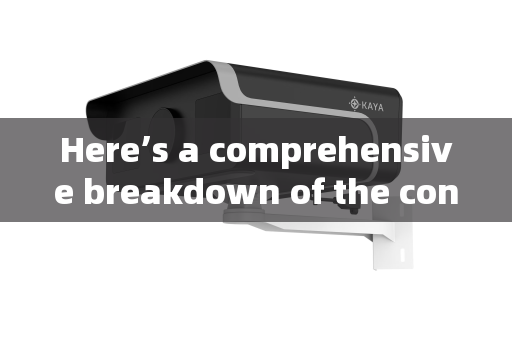
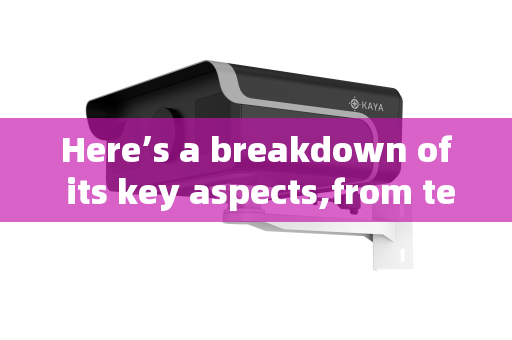
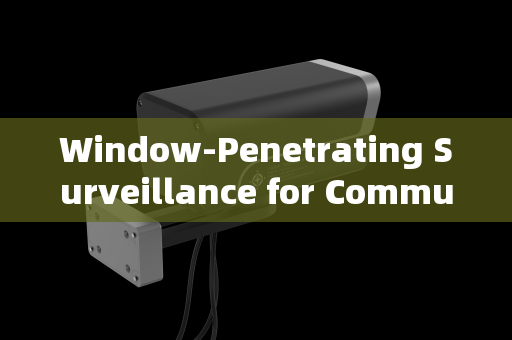
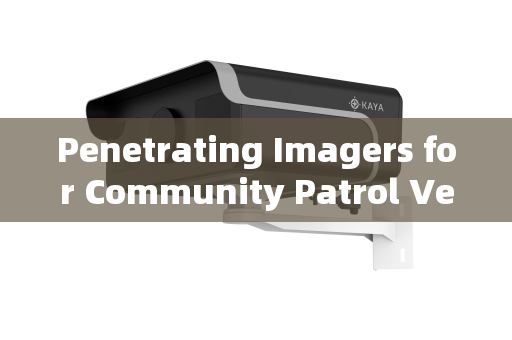
In critical scenarios where visibility is compromised by smoke, fog, haze, or other obscurants, conventional optical and thermal imaging systems often fail. For first responders, military personnel, and security operators, this loss of visual information can mean the difference between mission success and failure, life and death. Penetrative imaging systems, also known as see-through-smoke or gated imaging systems, are engineered to overcome these extreme visual challenges. This article explores the advanced technology that enables these systems to achieve clear imaging through dense smoke and other media.
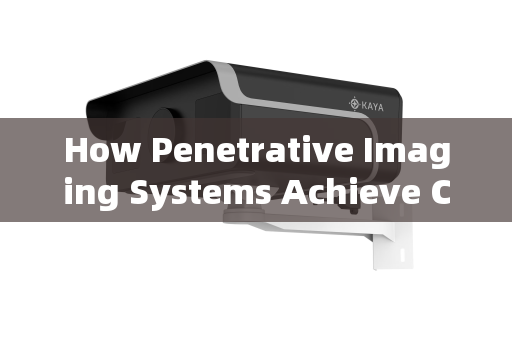
Penetration Imager Effect Images
Understanding Penetrative Imaging Systems
A penetrative imaging system is an active electro-optical system designed to acquire high-contrast visual and dimensional information of targets under conditions of low light, no light, or severe environmental degradation. Its core function is to "see through" visually obstructive media such as smoke, dust, fog, rain, snow, and even certain types of glass (e.g., vehicle windows, building facades, aircraft portholes). It achieves this not by magic, but by precisely controlling light and time.
Core Technology: Laser Range-Gated Imaging (LRG)
The technological breakthrough enabling this capability is Laser Range-Gated Imaging (LRG), or gate imaging. This innovative method synergistically combines a high-repetition-rate pulsed laser with a gated, intensified camera.
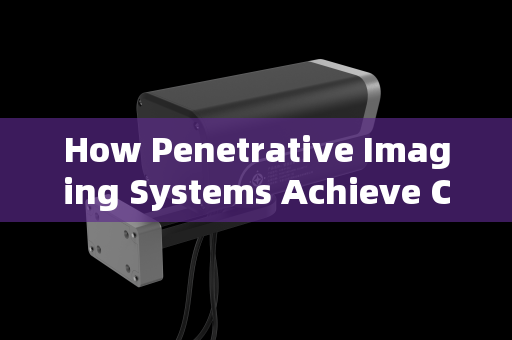
Penetration Imager Effect Images
Here’s how it works:
- Pulsed Illumination: The system projects short, powerful pulses of laser light (often in the near-infrared spectrum for eye-safety and better penetration) toward the scene.
- Precision Timing & Gating: The camera’s sensor, specifically an image intensifier tube with a Microchannel Plate (MCP), is kept "closed" (off) when the laser pulse is emitted and during its initial travel. This is crucial. As the pulse illuminates the environment, it first strikes nearby obscurants like smoke particles, causing intense backscatter that would normally blind a camera.
- Slicing the Scene by Time: A precision timing circuit, synchronized with nanosecond or even picosecond accuracy, "opens" the camera’s electronic shutter (the "gate") only for a very brief window (e.g., less than 3 nanoseconds). This delay is calculated so that the gate opens precisely when the laser light reflected from the target object (located at a specific distance) returns to the camera. The light scattered back from the obscurants closer than the target has already passed by the time the gate opens.
- Slice Stacking & 3D Imaging: By progressively adjusting the time delay between the laser pulse and the camera gate, the system can isolate and image successive "slices" of space at different distances. Stacking these slices builds a clear, high-contrast image of the scene while effectively suppressing the backscatter from obscurants. This process also allows for the direct extraction of precise three-dimensional (3D) range data for each pixel.
Key System Components & Performance
A typical system comprises:
- Pulsed Laser Illuminator: Provides high-power, short-duration light pulses.
- Gated Intensified Camera: The heart of the system. It includes an imaging lens, a Microchannel Plate (MCP) image intensifier (enabling optical gains exceeding 10^6), a high-voltage power supply, and critical timing and gating modules. These modules ensure ultra-fast gating (<3 ns) and phenomenal synchronization precision (better than 10 picoseconds).
- Beam Expander: Collimates and shapes the laser beam for uniform illumination.
- Processing & Control Unit: Manages synchronization, image processing, and 3D data calculation.
This architecture grants penetrative imaging systems exceptional long-range performance, high distance resolution, robust anti-interference capability, and effective backscatter suppression.
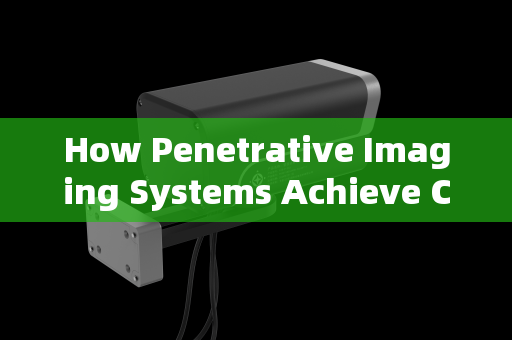
Penetration Imager Effect Images
Application Scenarios
Emergency & Rescue Services:
- Firefighting: Urban and wildland firefighting for navigating zero-visibility environments, locating victims, identifying flashover risks, and assessing structural integrity.
- Search and Rescue (SAR): Operations in smoke-filled buildings, industrial accidents, mine disasters, and maritime incidents.
- Training: High-fidelity simulated training in live-fire training facilities for fire academies and military bases.
Law Enforcement, Security & Military:
- Surveillance & Reconnaissance: Covert observation through windows, stained glass, or atmospheric obscurants for counter-terrorism, proof gathering, and tactical missions.
- Security & Checkpoint Screening: Detection of threats or contraband inside vehicles (exploiting the ability to penetrate certain glass types) and in ports for anti-smuggling operations.
- Force Protection: Enhanced situational awareness for perimeter security, VIP protection, and during civil disturbances in smoke-deployed environments.
Maritime & Border Security:
- All-Weather Navigation & Surveillance: Maintaining operational capability for ship boarding, port navigation, and coastal/border monitoring through fog, mist, and haze where standard cameras fail.
- Search and Rescue at Sea: Locating persons overboard or life rafts in poor visibility conditions.
Conclusion
Penetrative imaging systems, powered by Laser Range-Gated technology, represent a paradigm shift in imaging under adverse conditions. By mastering the dimension of time at the nanosecond level, they effectively peel away visual clutter caused by smoke and other obscurants. This provides emergency responders, security forces, and military operators with a decisive informational advantage, enhancing operational effectiveness, accelerating rescue times, and ultimately saving lives in situations where traditional sight is completely lost. As the technology matures, its integration into broader security, industrial, and automotive sensing frameworks promises even wider impact.