How Advanced Penetration Imaging Systems See Through the Blaze: A Technological Breakthrough in Emergency Response and Tactical Operations In high-stakes environments where visibility is critically compromised—such as the heart of an inferno, within dense smoke, or behind obscured barriers—conventional optical and thermal imaging systems often fail. The intense radiation, dynamic scattering, and blinding glare from flames present a formidable challenge. This is where Penetration Imaging Systems, leveraging Laser Range-Gated (LRG) Imaging* or Gated Imaging technology, emerge as a revolutionary solution. These systems achieve the seemingly impossible: delivering clear, high-contrast imagery through* flames and other obscurants, fundamentally enhancing situational awareness for first responders and tactical operators. The primary obstacle to imaging through flames is not opacity, but overwhelming, unstructured background noise. Flames emit intense, broadband visible and infrared radiation that saturates standard sensors. Furthermore, light from conventional illumination sources is scattered by particulates in smoke and the turbulent flame front itself, creating a "veil" of backscatter that washes out the target scene.
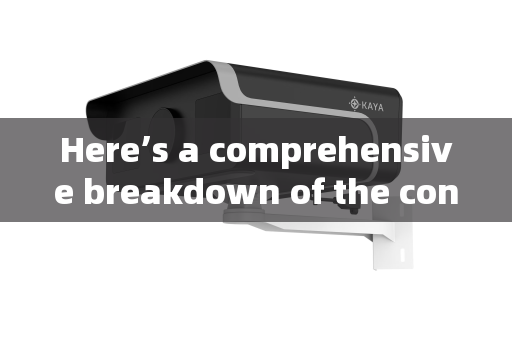
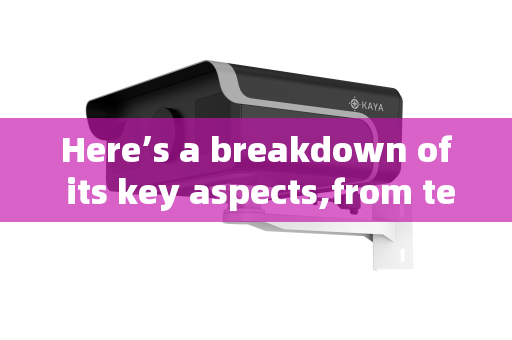
Penetration Imager Effect Images
Penetration Imaging Systems overcome this by employing a precise, time-slicing methodology. The core innovation lies in the synergistic combination of a high-repetition-rate pulsed laser and a gated, intensified camera. The system operates by emitting an ultra-short, powerful pulse of laser light (often in the eye-safe near-infrared spectrum) toward the area of interest. Crucially, the image intensifier inside the camera acts as an ultrafast optical shutter, remaining closed until the exact moment the laser pulse is calculated to have traveled to the target region and back.
By controlling the time delay (gate delay) between the laser pulse emission and the camera's shutter opening with nanosecond to picosecond precision, the system effectively selects only the photons reflected from a specific "slice" of space at a predetermined distance. Photons scattered from nearby obscurants like smoke, fog, or the flame front itself (backscatter) arrive earlier or later and are rejected by the closed shutter. This time-gating process eliminates most of the unwanted signal, resulting in a remarkably clear image of the target zone behind or within the interfering medium.
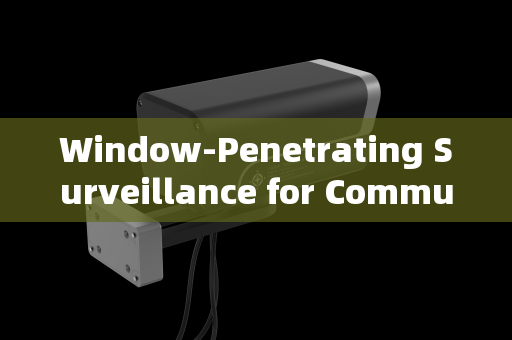
Penetration Imager Effect Images
System Architecture and Key Capabilities A typical system comprises:
- Pulsed Laser Illuminator: Provides high-power, short-duration pulses for long-range, eyesafe illumination.
- Gated Intensified Camera: The heart of the system. It incorporates a Microchannel Plate (MCP) image intensifier, a high-voltage power supply, and precision timing (gating & delay) electronics. This assembly can achieve optical gains exceeding 10^6, shutter speeds faster than 3 nanoseconds, and synchronization precision better than 10 picoseconds.
- Beam Expander & Imaging Lens: Shape the laser illumination and collect returning light for the camera.
This architecture confers exceptional performance characteristics: extended imaging range, high distance resolution, superior resistance to backscatter and glare, and powerful anti-interference capability. It enables target detection and reconnaissance not only through flames but also through various glass types (vehicle windows, architectural glass, aircraft portholes), atmospheric conditions (rain, snow, fog, haze), and even underwater.
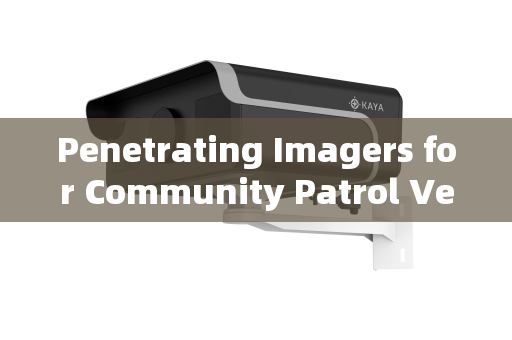
Penetration Imager Effect Images
Critical Application Scenarios
-
Emergency Response & Firefighting:
- Urban & Wildland Firefighting: Enables firefighters to see through dense smoke and flame walls to locate victims, identify structural integrity, and pinpoint the seat of a fire, significantly improving rescue efficiency and reducing casualties.
- Search and Rescue (SAR): Vital for operations in collapsed structures, mining disasters, and maritime incidents where visibility is near zero.
- Training: Integrated into live-fire simulation training systems and used to monitor high-risk training exercises at fire academies and major facilities.
-
Law Enforcement, Security, and Military Operations:
- Tactical Assault & Counter-Terrorism: Allows for covert, through-window situational assessment before entry, enhancing officer safety and operational success in hostage rescue or armed intervention scenarios.
- Surveillance & Reconnaissance: Facilitates stand-off, undetected observation through windows or light obscurants for intelligence gathering, evidence collection, and suspect tracking.
- Border & Coastal Security: Performs long-range fog-penetration imaging and glare suppression, ensuring continuous surveillance and security operations for ports, coastal zones, and borders in adverse weather and lighting conditions. Critical for intercepting illicit trafficking and unauthorized maritime activities.
- Checkpoint Security & Vehicle Screening: Capable of detecting concealed cargo or personnel inside vehicles by penetrating tinted windows and glare.
-
Smart City & Critical Infrastructure Protection:
- Enhances the capability of smart security and policing systems by providing reliable all-weather, all-condition imaging for perimeter security of landmarks, large buildings, and transportation hubs.
Conclusion The penetration imaging system represents a paradigm shift in visual intelligence acquisition under extreme conditions. By mastering the dimension of time through advanced laser gating, it effectively "sees around" obscurants like flames. Its ability to deliver critical visual information where traditional systems are blinded makes it an indispensable tool for modern emergency services, law enforcement agencies, and military units. As the technology evolves, offering even greater range, resolution, and miniaturization, its role in safeguarding lives and ensuring mission success across the public safety, national security, and disaster response sectors will only become more profound.