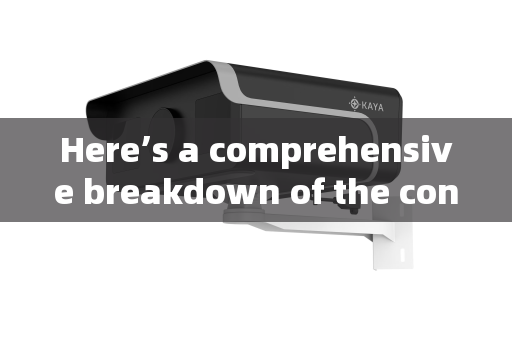
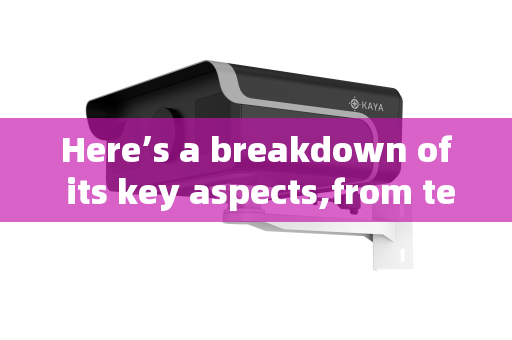
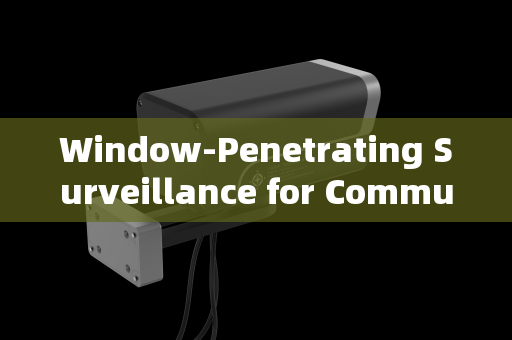
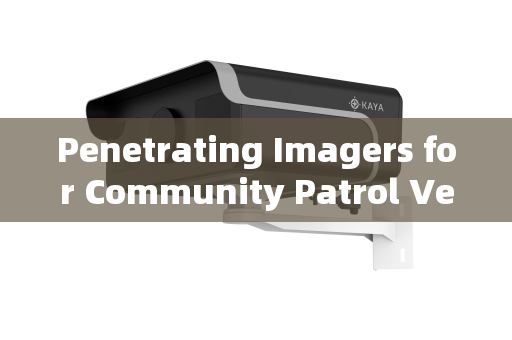
Penetration Imaging Systems: Overcoming Glass Curtain Wall Challenges for Enhanced Surveillance and Rescue Operations** In modern urban environments and critical security scenarios, the prevalence of glass curtain walls, vehicle windows, and specialized glazing presents a significant obstacle to traditional imaging and surveillance methods. Reflections, glare, and environmental interference often obscure targets, compromising situational awareness for emergency responders, military personnel, and law enforcement agencies. Penetration imaging systems have emerged as a groundbreaking technological solution to this challenge, enabling clear imaging through various transparent and semi-transparent barriers under extreme conditions.
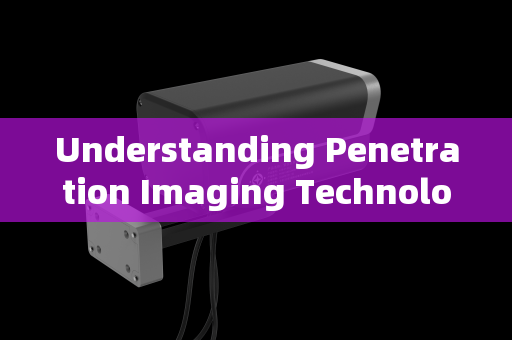
Penetration Imager Effect Images
At its core, a penetration imaging system is a sophisticated active imaging device designed to "see through" visual obstructions that typically defeat conventional cameras and optical sensors. Its primary function is to acquire high-contrast, detailed images of subjects or objects located behind mediums like glass, smoke, fog, rain, or light foliage, often in low-light or no-light environments.
The technological breakthrough is achieved through advanced Laser Range-Gated Imaging (LRGI), also known as gated imaging technology. This method innovatively combines a high-repetition-frequency pulsed laser with a gated image-intensified camera. The system operates by emitting short, nanosecond-duration laser pulses to illuminate the scene. The key lies in the precise, time-synchronized control between the laser pulse and the camera's ultra-fast optical shutter.
The process works as follows: after a laser pulse is fired, the camera's shutter remains closed, blocking the intense, immediate backscatter from the intermediary medium (like the glass surface or atmospheric particles). After a precisely calculated time delay—corresponding to the time it takes for the laser light to travel to the target behind the glass and back—the camera's shutter opens for a few nanoseconds. This "time-gating" effectively slices the scene by distance, capturing only the light reflected from the target plane of interest while rejecting unwanted reflections from the glass surface itself and other scatter. By stacking or scanning these "time slices," a clear image of the concealed target is reconstructed.
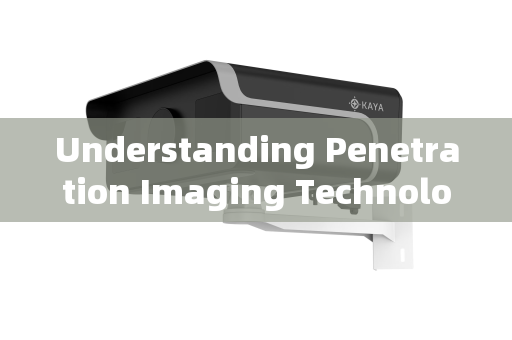
Penetration Imager Effect Images
System Composition and Capabilities
A typical penetration imaging system comprises several key components:
- Pulsed Laser Illuminator: Provides high-power, short-duration laser pulses.
- Beam Expander: Shapes and directs the laser illumination.
- Imaging Lens: Collects the returning light.
- Gated Image-Intensified Camera: The core sensor, incorporating a Microchannel Plate (MCP) image intensifier, high-voltage module, timing module, and gating electronics. This assembly enables extraordinary performance, including optical gain exceeding 10^6, optical shutter speeds below 3 nanoseconds, and timing synchronization precision better than 10 picoseconds.
This configuration grants the system exceptional capabilities: long operational range, high distance resolution, superior resistance to backscatter and environmental interference (smoke, fog, rain, snow, haze), and the ability to overcome strong ambient light or glare. Consequently, it meets the demand for long-range, non-detectable reconnaissance through car windows, glass curtain walls,特种玻璃, train windows, aircraft portholes, as well as various obscurants. It also holds potential for underwater imaging applications.
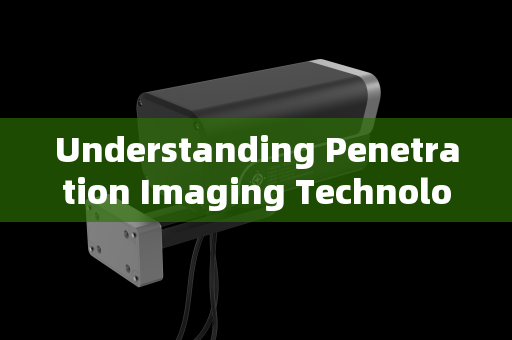
Penetration Imager Effect Images
Application Scenarios in Emergency, Law Enforcement, and Defense
The practical applications of penetration imaging systems are vast and transformative across multiple high-stakes domains:
-
Emergency Response & Firefighting:
- Urban & Wildland Firefighting: Enables search and rescue (SAR) teams to locate victims through dense smoke and intense flame fronts inside buildings with extensive glazing. It improves fireground efficiency and reduces responder casualties.
- Disaster Rescue: Applicable in mine collapses, water rescues, and national-level disaster response for detecting signs of life and assessing structural integrity behind debris and windows.
- Training & Infrastructure Protection: Used in fire training facilities, live-fire simulation systems, and for safeguarding large buildings and iconic landmarks with advanced glazing.
-
Law Enforcement & Military Operations:
- Security & Counter-Terrorism: Vital for hostage rescue scenarios, barricaded subject resolution, and counter-terrorism operations, allowing officers to assess threats inside vehicles or buildings without exposing themselves.
- Surveillance & Reconnaissance: Supports covert surveillance, evidence gathering, pursuit operations, and tactical reconnaissance by penetrating windows for intelligence collection.
- Border & Customs Enforcement: Assists in anti-smuggling operations, drug interdiction, and vehicle inspection for hidden compartments or overloaded cargo by imaging through containers and vehicle panels.
- Public Security & Crowd Control: Integrates into Smart City, Smart Policing, and perimeter security frameworks for enhanced situational awareness during major events or in sensitive areas.
-
Maritime & Border Security:
- Coastal & Maritime Defense: Performs long-range imaging through fog and mist (fog-penetrating imaging) and suppresses glare from the water surface. This ensures the continuity of maritime patrols, ship boarding operations, port security, and coastal surveillance missions in adverse weather conditions.
In conclusion, penetration imaging systems represent a paradigm shift in electro-optical surveillance and reconnaissance. By mastering the precise control of light and time, these systems effectively neutralize the challenges posed by ubiquitous glass barriers and harsh environmental conditions. Their deployment empowers first responders, law enforcement agencies, and defense personnel with critical visual intelligence, ultimately enhancing operational effectiveness, public safety, and mission success rates across a diverse spectrum of challenging scenarios.