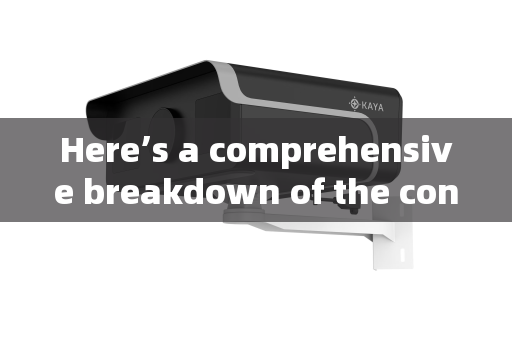
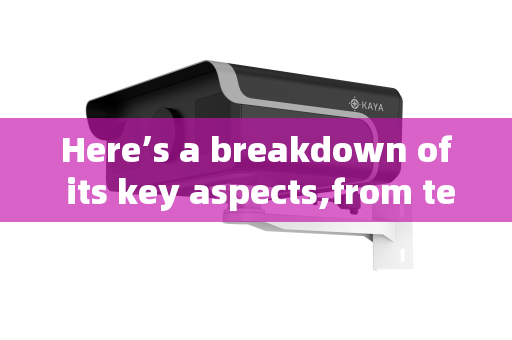
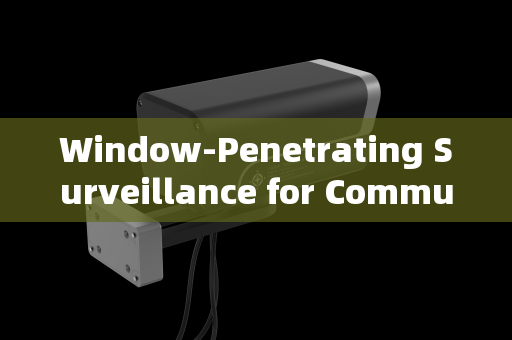
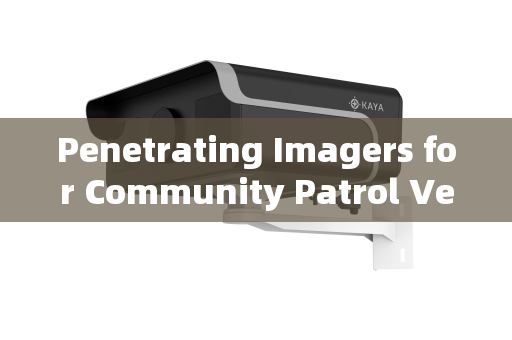
In the realms of law enforcement, emergency response, and military operations, the ability to gather critical visual intelligence from within a vehicle before direct engagement is often a matter of operational success, officer safety, and sometimes life or death. Standard visual and thermal cameras are typically defeated by tinted windows, which are designed to reflect external light and obscure the interior. This is where specialized penetration imaging systems come into play, offering a technological solution to this persistent challenge.
Penetration Imager Effect Images
Understanding Penetration Imaging Systems
A penetration imaging system is a sophisticated electro-optical device engineered to acquire clear, high-contrast images of objects or scenes located behind visually obstructive mediums. Its primary function is to "see through" barriers that scatter, absorb, or reflect light, such as tinted automotive glass, architectural glass, smoke, fog, and even water. The core application is covert reconnaissance and situational awareness, allowing operators to identify threats, count occupants, detect weapons, or assess conditions inside a vehicle or building from a safe, standoff distance without alerting the subjects inside.
The Core Technology: Laser Range-Gated Imaging (LRGI)
The breakthrough enabling this capability is Laser Range-Gated Imaging (LRGI), or gated imaging technology. This method innovatively combines a high-repetition-rate pulsed laser with a gated intensifier camera to achieve remarkable clarity through obscurants.
Here’s how it works to penetrate a tinted vehicle window:
Penetration Imager Effect Images
-
Pulsed Illumination: The system emits extremely short, powerful pulses of laser light (on the order of nanoseconds) towards the target vehicle. This specific wavelength of light can partially penetrate the tinted glass, which may block visible light but is often less opaque to certain near-infrared (NIR) or short-wave infrared (SWIR) bands used by these systems.
-
Precision Synchronization & Time-Slicing: The key lies in the nanosecond-precise synchronization between the laser pulse and the camera's shutter. The camera's intensifier (or "gate") remains closed initially. As the laser pulse travels, it illuminates everything in its path: the windshield, the interior, and the seats, while also creating backscatter from rain, dust, or the glass surface itself.
-
Rejecting Backscatter, Capturing the Target: The camera's gate is programmed to open only for an ultra-short duration (e.g., <3ns) at the exact moment when the light reflected from the interior of the vehicle returns to the camera. Light from the much-closer windshield surface (the backscatter) has already returned and arrived while the gate was closed, and is therefore not recorded. This process effectively "slices out" a specific depth slice corresponding to the vehicle's cabin.
-
Image Formation: By stacking multiple slices or precisely gating on the cabin distance, the system builds a high-contrast image of the interior. The tinted window becomes virtually transparent in the final image because its reflected light has been temporally filtered out. The system provides not only 2D imagery but can also derive accurate 3D distance information for each pixel.
System Components
Penetration Imager Effect Images
A typical penetration imaging system comprises:
- Pulsed Laser Illuminator: Provides the high-power, short-duration light pulses.
- Gated Intensifier Camera: The core sensor. It contains a Microchannel Plate (MCP) image intensifier that provides >10^6 optical gain, a high-voltage module, and timing/gating electronics capable of shutter speeds below 3ns and synchronization precision better than 10ps.
- Beam Expander: Shapes and projects the laser beam to cover the field of view.
- Imaging Lens: Collects the returning light.
Application Scenarios
Emergency Response: In fireground reconnaissance, these systems allow firefighters to see through smoke-filled and window-obscured vehicles at accident sites or in parking garage fires, identifying trapped victims faster. For urban and wildland firefighting and mine/mountain rescue, they enable navigation and victim location through dense smoke, dust, and haze.
Law Enforcement & Military: This is a force multiplier for tactical teams. It enables covert surveillance and threat assessment (occupant numbers, weapons) inside suspect vehicles during surveillance, checkpoint operations, or high-risk stops. It is invaluable for counter-terrorism, hostage rescue, drug interdiction, and border security operations, allowing intelligence gathering without compromising the operation.
Coastal & Border Defense: These systems excel in long-range penetration imaging through fog and mist, supporting maritime interdiction, port security, and coastal surveillance by maintaining visibility in adverse weather where conventional cameras fail.
Conclusion
Penetration imaging systems, powered by Laser Range-Gated technology, have revolutionized the capability to conduct remote, non-invasive reconnaissance through tinted vehicle windows and other challenging media. By mastering the dimension of time at the nanosecond level, they reject unwanted reflections and scatter to reveal hidden details. From saving lives in rescue operations to ensuring officer safety and mission success in tactical law enforcement and military scenarios, this technology provides a critical visual intelligence edge in high-stakes environments where seeing the unseen is paramount. Its integration into smart city frameworks, critical infrastructure protection, and advanced security platforms continues to expand its role in modern public safety and defense.