Penetration Imaging Systems vs. Infrared Thermal Imagers: A Comparative Analysis for Emergency Response and Tactical Operations** In the critical fields of emergency response, law enforcement, and defense, advanced imaging technologies are indispensable for situational awareness, threat detection, and mission success. Two powerful yet fundamentally distinct technologies often come to the forefront: Penetration Imaging Systems and Infrared (IR) Thermal Imagers. While both serve the purpose of "seeing" beyond normal human vision, their underlying principles, capabilities, and optimal applications differ significantly. Understanding these differences is crucial for selecting the right tool for high-stakes scenarios.
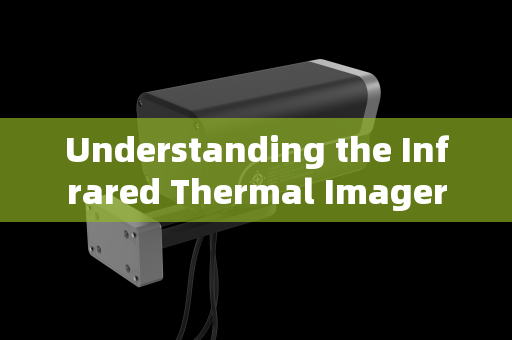
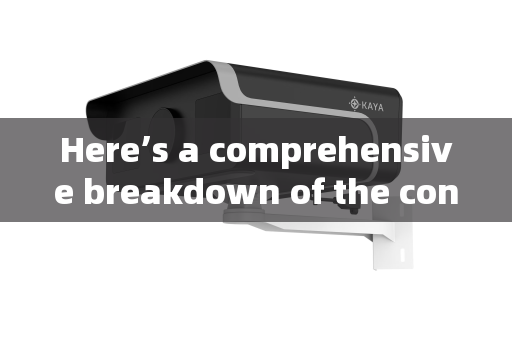
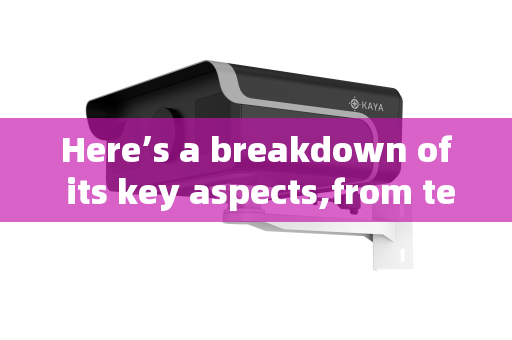
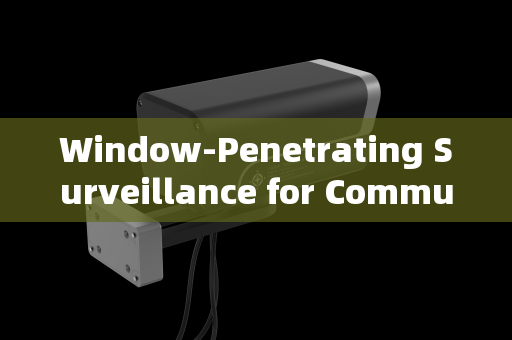
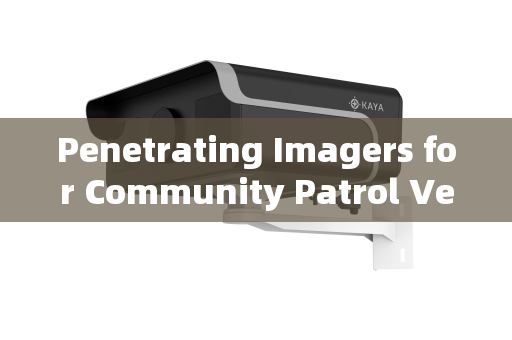
Penetration Imager Effect Images
An Infrared Thermal Imager, commonly called a thermal camera, is a passive imaging device. It detects the mid-wave (MWIR) or long-wave (LWIR) infrared radiation (heat) naturally emitted by all objects based on their temperature. It does not require any external light source. The camera converts this thermal radiation into a visual image (thermogram), where different colors or shades represent varying temperature distributions.
- Function: To visualize heat signatures, enabling users to detect living beings, overheated equipment, or objects with temperature differentials from their surroundings.
- Key Characteristics: Passive operation (emits nothing); effectiveness is influenced by environmental temperature and the target's emissivity; cannot see through transparent barriers like glass (which reflects/transmits IR, blocking the view of the target behind it); performance can degrade in heavy rain, fog, or smoke as these particulates scatter and absorb thermal radiation.
- Primary Applications: Search and rescue (locating persons by body heat), firefighting (seeing through smoke to find hotspots and victims), building diagnostics, perimeter security (intruder detection), industrial inspection, and military surveillance (detecting vehicles or personnel).
Understanding the Penetration Imaging System (Laser Range-Gated Imaging System)
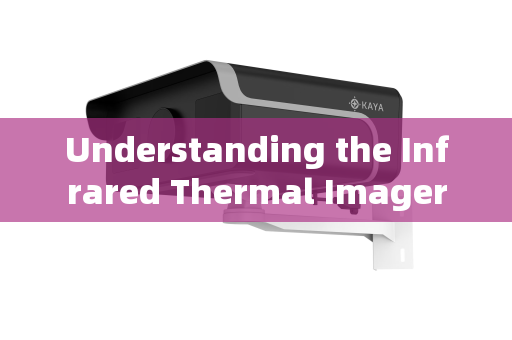
Penetration Imager Effect Images
The technology described in the prompt refers specifically to an active Laser Range-Gated Imaging (LRGI) System, a type of penetration imaging system. This is an active sensing technology that combines a high-frequency pulsed laser illuminator and a specialized gated camera.
- Core Technology & Function: It operates on the principle of Time-of-Flight and range-gating. The system emits short, powerful pulses of laser light (often at eye-safe, near-infrared wavelengths). A precisely synchronized, gated intensifier inside the camera acts as an ultra-fast shutter, opening only for a nanosecond-scale window exactly when the light reflected from a specific, pre-determined distance slice returns. Light from other distances (like backscatter from fog, smoke, or windows) is effectively excluded. By "slicing" the scene at different delays, it can reconstruct clear images of targets obscured behind scattering media.
- Key Capabilities:
- Medium Penetration: Its primary strength is penetrating scattering media. This includes adverse weather (fog, haze, light rain, snow), obscurants (smoke, dust), and certain transparent barriers (car windows, building glass, aircraft canopies). It does not "see through" solid walls but overcomes the scatter that blinds conventional and thermal cameras.
- Long Range & High Contrast: The coherent, pulsed laser provides high-contrast illumination at extended distances, day or night.
- 3D Imaging Potential: With precise timing (<10 ps synchronization), it can gather accurate depth information for each pixel, enabling high-resolution 3D profiling.
- All-Weather & Night Vision: Operates effectively in total darkness and in conditions where thermal imagers struggle due to atmospheric scattering.
- System Components: Typically comprises a pulsed laser transmitter, a beam expander, a receiving lens, and a Gated Intensified Camera. This camera integrates a Microchannel Plate (MCP) image intensifier, a high-voltage module, and precise timing/gating electronics to achieve extreme optical gain and nanosecond-scale shutter control.
- Application Scenarios:
- Emergency Response: Firefighting (navigating through dense smoke, locating victims and hazards behind windows in structural fires), maritime and wilderness search and rescue in fog, post-disaster assessment.
- Law Enforcement & Tactical Operations: Covert surveillance through windows for hostage situations or drug operations, evidence gathering, anti-smuggling operations (inspecting vehicle contents), perimeter monitoring in fog, and securing high-value infrastructure.
- Defense & Border Security: Long-range surveillance in degraded visual environments (DVE), maritime patrol and interdiction in fog, harbor protection, and target identification through obscurants.
Critical Differences: A Side-by-Side Comparison
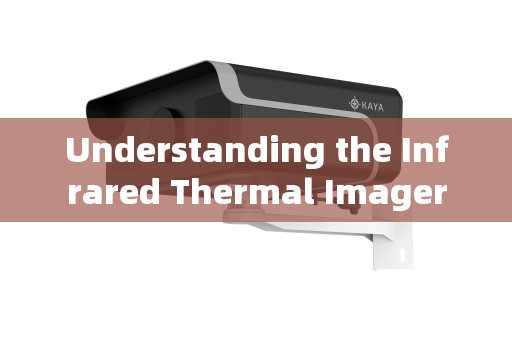
Penetration Imager Effect Images
| Feature | Penetration Imaging System (LRGI) | Infrared Thermal Imager |
|---|---|---|
| Operating Principle | Active: Emits pulsed laser light and detects the time-gated reflection. | Passive: Detects inherent thermal radiation (heat) from objects. |
| Light Source | Requires its own high-power, pulsed laser illuminator (NIR wavelength). | Requires no external illumination; uses ambient thermal radiation. |
| Primary Output | High-resolution, reflective contrast image (often monochrome), plus potential 3D data. | Thermogram displaying temperature gradients (heat map). |
| Penetration Capability | Excellent for penetrating scattering media: fog, smoke, haze, light precipitation, and transparent barriers (glass). | Cannot penetrate glass; performance is degraded by heavy fog/smoke/rain which absorb thermal IR. |
| Influence of Weather | Enhanced performance in obscurants; designed to overcome backscatter. | Degraded performance in obscurants; particulates block thermal signatures. |
| Target Detection Basis | Reflectivity and range of surfaces. Can see objects regardless of their temperature. | Temperature difference between target and background. Cannot see objects at ambient temperature. |
| Typical Applications | See-through-glass surveillance, all-weather maritime navigation, firefighting in smoke, 3D reconnaissance. | Hotspot detection, search & rescue for living beings, perimeter intrusion detection, electrical inspections. |
Conclusion: Complementary Tools for Modern Operations
The choice between a Penetration Imaging System and an Infrared Thermal Imager is not a matter of which is superior, but which is mission-appropriate. They are fundamentally different sensing modalities.
- Use a Thermal Imager when your primary need is to detect heat signatures—finding people, identifying overheating equipment, or conducting night surveillance based on thermal contrast.
- Deploy a Penetration Imaging (LRGI) System when the mission requires seeing through visual obstructions such as smoke, fog, or windows to obtain a clear, reflective image of a target, especially in complete darkness or at long ranges under adverse conditions.
For many advanced operational units, these technologies are complementary. Integrating both capabilities provides a comprehensive imaging suite, ensuring operators have both thermal awareness and the ability to cut through obscurants and glass, delivering a decisive advantage across the complex visual challenges of emergency services, law enforcement, and defense operations.