In the realms of military, law enforcement, emergency response, and security, acquiring visual information in degraded or obscured environments is paramount. Two key technologies often discussed in this context are traditional night-vision devices (NVDs) and the more advanced penetration imaging systems. While both aim to "see in the dark," their fundamental principles, capabilities, and applications differ significantly. Understanding this distinction is crucial for selecting the right tool for mission-critical operations.
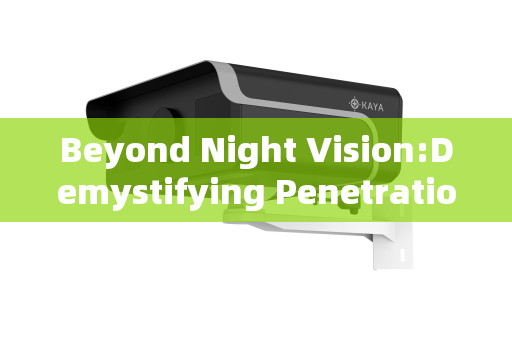
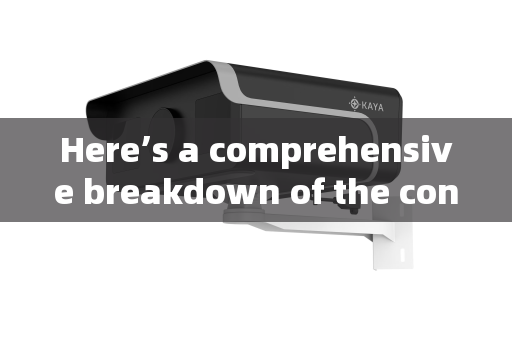
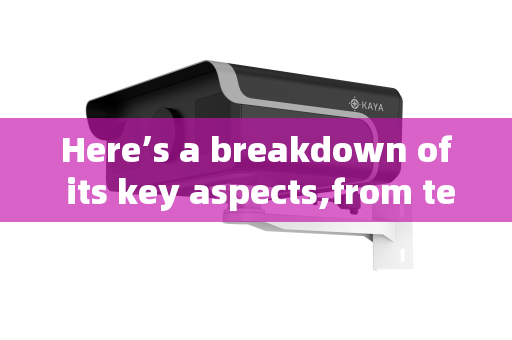
Penetration Imager Effect Images
I. Core Technological Principles: Amplification vs. Active Gated Imaging
Night-Vision Devices (NVDs): Conventional NVDs, including image intensifier tubes (Generation I-IV), are passive optical instruments. Their primary function is to amplify extremely low levels of ambient light (starlight, moonlight) from a scene. They cannot create an image in total darkness. Photons enter the objective lens, strike a photocathode, releasing electrons. These electrons are accelerated and multiplied through a Micro-Channel Plate (MCP), striking a phosphor screen to produce a visible green-hued image. Their performance is severely degraded by bright light sources (requiring automatic gain control or gating in advanced models) and cannot see through obscurants like smoke, fog, or glass with glare.
Penetration Imaging Systems (Laser Range-Gated Imaging): This is an active imaging technology. It does not rely on ambient light. Instead, it combines a high-repetition-rate pulsed laser with a gated, intensified camera. The system operates by emitting short, powerful pulses of laser light (often in the near-infrared spectrum) toward the target area. The key innovation lies in precise time synchronization. The camera's ultra-fast optical shutter (gating), with precision better than 10 picoseconds, opens only for a very brief nanosecond-scale window exactly when the laser light reflected from the target at a specific distance returns. Light from other distances (like backscatter from fog, smoke, or windshield glare) is effectively excluded.
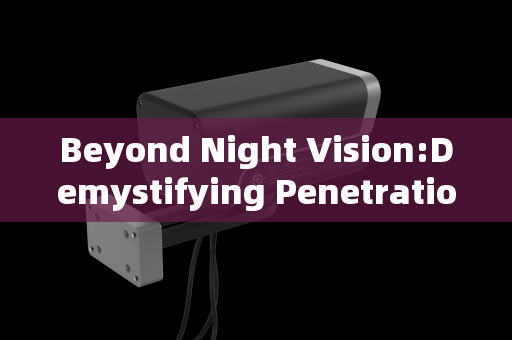
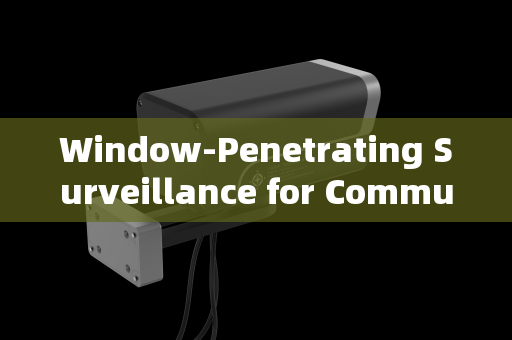
Penetration Imager Effect Images
This "slice-by-slice" scanning of different range segments allows the system to build a high-contrast image of the target while suppressing noise and interference. The intensified camera, often incorporating an MCP, provides optical gains exceeding 10^6, enabling detection of the faint returning signal. This core principle grants penetration imaging its unique advantages.
II. Functional and Performance Divergence
The differing principles lead to a stark contrast in performance:
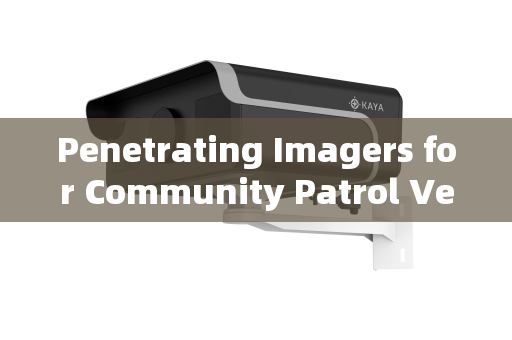
Penetration Imager Effect Images
- Lighting Condition: NVDs require some ambient light. Penetration systems operate effectively in pitch darkness, twilight, or harsh lighting.
- Penetration Capability: This is the defining difference. NVDs cannot penetrate transparent barriers affected by reflections (e.g., car windows at night). Penetration systems can see through various glass types (vehicle windows, building facades, aircraft portholes, special laminated glass) by gating out the direct surface reflection. Furthermore, they can image through atmospheric obscurants like smoke, fog, haze, rain, and snow, and even perform underwater imaging.
- Interference Resistance: NVDs are vulnerable to blooming from bright lights. Penetration systems exhibit strong resistance to backscatter and glare, maintaining image clarity. They can also incorporate strong light suppression.
- Range and Resolution: While both have long-range variants, penetration systems can achieve superior contrast at long distances in obscuring conditions and provide high range resolution due to the time-gating, enabling basic 3D profiling of the scene.
- Covertness: Advanced NVDs are passive and covert. Laser-based penetration systems are active and could be detectable by appropriate sensors, though laser wavelengths and pulsing can be managed for low probability of intercept.
III. Application Scenarios: Matching the Tool to the Task
This performance matrix dictates their ideal applications:
For Night-Vision Devices (NVDs): Ideal for general surveillance, navigation, and target acquisition in low-light conditions where obscurants are not a major factor. Common in infantry operations, perimeter security, wildlife observation, and some navigation tasks.
For Penetration Imaging Systems: Essential for specialized scenarios where seeing through something is required. Their applications are critical in:
- Emergency Response & Rescue: Urban and wildland firefighting—seeing through smoke and flames to locate victims or hotspots. Search and Rescue (SAR) in dense smoke, fog, or during night-time operations for maritime, alpine, or urban disasters. Used in high-level fire training facilities and critical infrastructure protection.
- Law Enforcement & Military Operations: Covert surveillance through windows for counter-terrorism, hostage rescue, and evidence gathering. Border and coastal surveillance penetrating haze, fog, and glare for anti-smuggling, interdiction, and port security. Vehicle inspection for counter-terrorism checkpoints to detect occupants or threats inside vehicles without alerting suspects. Military reconnaissance and targeting in adverse weather.
- Security & Critical Infrastructure: Long-range perimeter security for ports, airports, and high-value facilities in all weather conditions. Intrusion detection through obscuring weather.
- Maritime & Homeland Security: Ensuring safe navigation and docking in poor visibility. Ship boarding operations and coastal patrol with enhanced situational awareness.
Conclusion
In summary, while traditional night-vision devices remain invaluable for passive light amplification, penetration imaging systems represent a technological leap forward for active, discrimination-based imaging. By mastering the precise timing of laser pulses and camera gating, these systems deliver clear, high-contrast imagery where NVDs fail—be it through blinding glare, dense obscurants, or transparent barriers. For professionals in emergency services, law enforcement, and defense facing the challenges of degraded visual environments, penetration imaging is not merely an alternative to night vision; it is a transformative capability that redefines the possible, turning opacity into actionable intelligence and saving lives in the process. The choice, therefore, hinges not on which technology is superior in general, but on which one is specifically engineered to overcome the operational obstacles at hand.