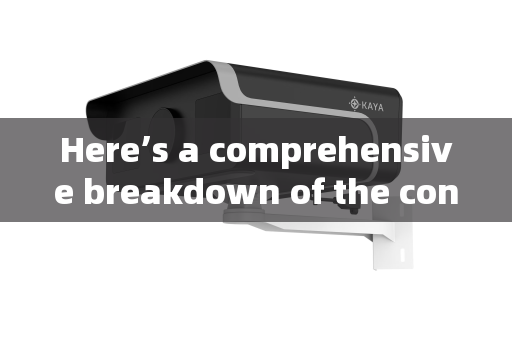
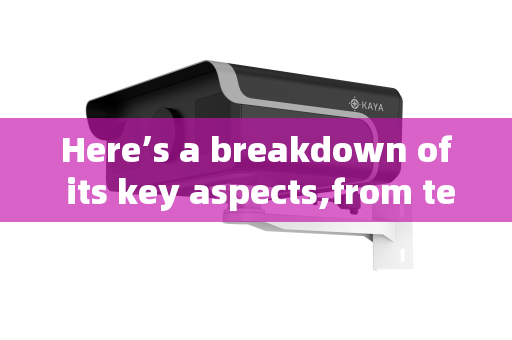
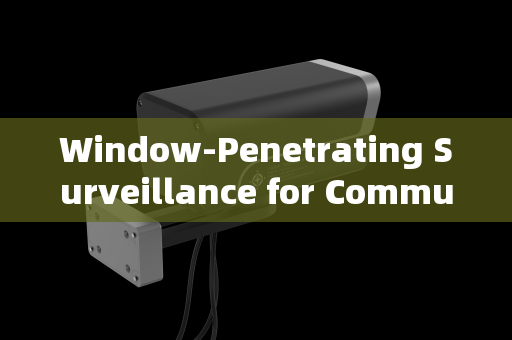
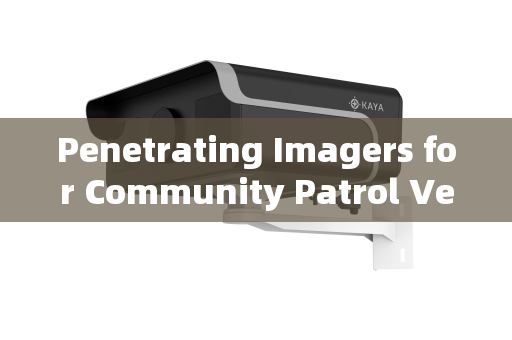
In the evolving landscape of law enforcement and public safety, the ability to gather critical intelligence swiftly, safely, and with minimal intrusion is paramount. Mobile law enforcement vehicles—the nerve centers of rapid response—are increasingly being equipped with sophisticated surveillance and reconnaissance technologies. Among these, the Penetration Imaging System stands out as a transformative tool, redefining the capabilities of officers in the field by allowing them to "see the unseen."
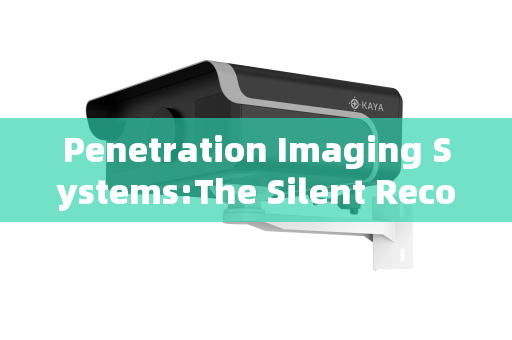
Penetration Imager Effect Images
Understanding Penetration Imaging Technology
At its core, a Penetration Imaging System is a cutting-edge active imaging solution designed to overcome the fundamental limitations of traditional optical and thermal cameras in challenging environments. It employs advanced laser range-gated imaging (gated imaging technology), which innovatively combines a high-repetition-rate pulsed laser with an intensified gated camera.
The system operates on a precise time-slicing principle. A powerful, ultra-short (nanosecond) pulse of laser light illuminates the scene. The gated camera, synchronized with nanosecond-to-picosecond precision, opens its shutter only for a brief moment corresponding to the time it takes for light to travel to a specific distance and back. By progressively delaying this shutter opening, the system scans through different "slices" of space, stacking these images to construct a clear view. This process effectively filters out scattered light from obscurants like fog, smoke, or glare that arrive at different times, providing exceptional backscatter suppression.
Key technical components include a pulsed laser, a gated/intensified camera (featuring a Microchannel Plate - MCP - for gain exceeding 10^6x, high-voltage modules, and precision timing circuitry), beam expanders, and imaging lenses. This setup enables long-range imaging, high distance resolution, superior anti-interference capability, and operation in extreme low-light or no-light conditions.
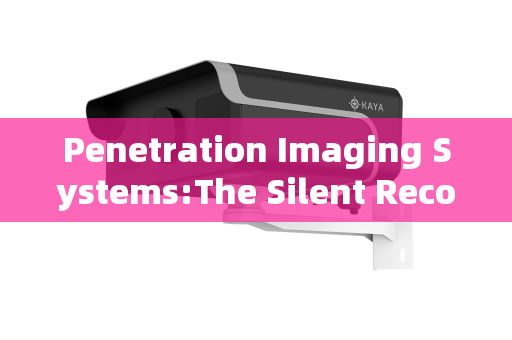
Penetration Imager Effect Images
The Pivotal Role in Mobile Law Enforcement Vehicle Reconnaissance
When integrated into mobile command units, patrol vehicles, or specialized tactical units, penetration imaging systems become a force multiplier, enhancing situational awareness and operational safety in several critical ways:
Covert, Long-Range Reconnaissance and Surveillance: Mobile units often need to assess potentially hostile situations from a safe standoff distance. Penetration imaging allows officers to conduct discreet surveillance through barriers. Its most notable capability is the non-intrusive penetration of various glazing materials—car windows, building glass facades, train or aircraft windows—even under cover of darkness. This enables the identification of occupants, counting of individuals (addressing over-crowding), detection of weapons, or monitoring suspicious activities inside vehicles or buildings without alerting subjects, thereby preserving the element of surprise crucial for counter-terrorism, narcotics interdiction, and hostage rescue operations.
Overcoming Environmental and Adversarial Obscurants: Field conditions are rarely ideal. Whether it's heavy rain, snow, fog, haze, or smoke from fires or deliberate obscurants (e.g., smoke grenades), traditional visibility plummets. Penetration imaging systems excel in these adverse weather and medium conditions, maintaining clear imaging capability where other systems fail. This ensures continuous reconnaissance capability during pursuits, perimeter security in poor weather, or operations in industrial accident sites.
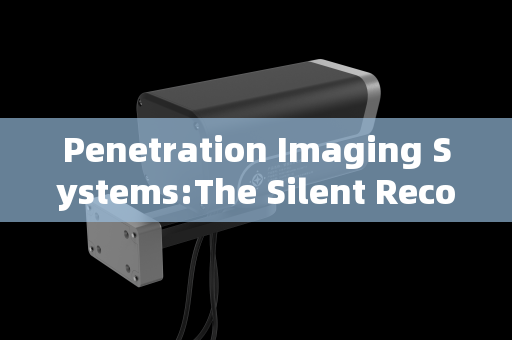
Penetration Imager Effect Images
Enhanced Tactical Assault and Crisis Response Planning: Before breaching a structure or approaching a vehicle, understanding the interior layout and threat disposition is critical. Mounted on a mobile tactical vehicle, the system can provide real-time, penetration-based imagery to command centers. This intelligence is vital for planning raids, counter-assault operations, or executing high-risk warrants, directly contributing to officer safety and mission success in anti-riot, counter-terrorism, and arrest scenarios.
Search and Rescue (SAR) and Emergency Response Support: While primarily a law enforcement tool, its utility extends to allied emergency services. Mobile units responding to urban or wildland fire scenes can use the system to peer through smoke and flames to locate trapped individuals. In maritime or shoreline units, the technology's reported underwater imaging potential aids in water rescue and recovery missions, aligning with broader public safety mandates.
Border and Coastal Security: For mobile units patrolling vast borders or coastlines, the system's long-range, fog-penetrating, and glare-suppression capabilities are invaluable. It enables the detection and monitoring of vessels or individuals attempting illegal crossings under the cover of night or inclement weather, enhancing the effectiveness of border protection, anti-smuggling, and coastal defense operations.
Integration into the Broader Ecosystem: Smart Cities and Public Safety
The data from vehicle-mounted penetration imaging systems can be integrated into broader Smart City, Smart Security, and Smart Policing networks. Real-time feeds contribute to a common operational picture, aiding in city-wide surveillance, major event security, fugitive tracking, and forensic evidence gathering.
Conclusion
The penetration imaging system is far more than just a powerful camera; it is a reconnaissance game-changer for mobile law enforcement. By granting the ability to conduct clear, long-range, barrier-penetrating surveillance in virtually any environmental condition, it fills a critical gap in traditional optical and thermal imaging. It empowers officers with unprecedented situational awareness, enhances operational safety, and provides a decisive tactical advantage in scenarios ranging from routine traffic stops to high-stakes counter-terrorism operations. As this technology continues to evolve, its role as an indispensable asset in the mobile law enforcement toolkit is set to become standard, fundamentally shaping the future of proactive, intelligence-led policing and public safety.