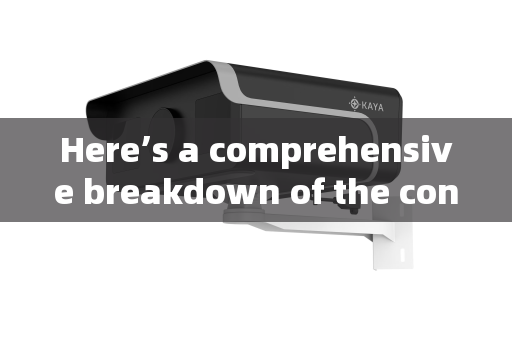
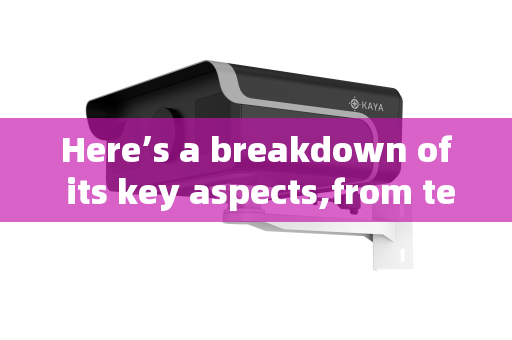
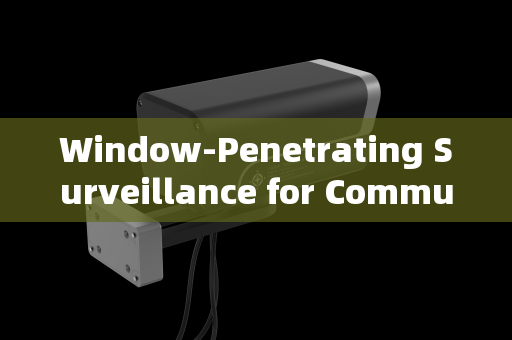
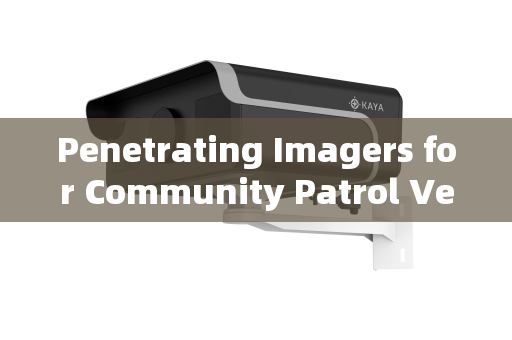
In the complex and demanding landscape of modern urban security, checkpoint reconnaissance represents a critical line of defense. It is tasked with the dual challenge of ensuring robust security while maintaining operational fluidity, often in environments characterized by low visibility, obstructions, and deliberate concealment. The Penetration Imaging System (PIS), leveraging advanced Laser Range-Gated Imaging (LRG) technology, has emerged as a transformative tool, redefining the capabilities of security personnel in these high-stakes scenarios.
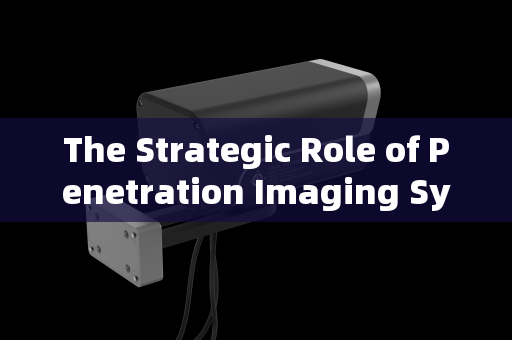
Penetration Imager Effect Images
Understanding the Penetration Imaging System
At its core, a PIS is a sophisticated electro-optical system designed to "see through" visual obscurants and certain barriers. It innovatively integrates a high-repetition-rate pulsed laser with a gated intensifier camera. The system operates by emitting ultra-short (nanosecond) laser pulses toward a target area. The key innovation lies in the precise, time-synchronized control of the camera's optical shutter. This shutter opens only for a minutely delayed interval corresponding to the time it takes for the laser light to travel to a specific "slice" of space and back, rejecting all other scattered or reflected light.
This time-slicing or "gating" technique provides exceptional capabilities:
- Overcoming Backscatter: It effectively negates the blinding effect of backscatter from particulates like smoke, fog, rain, snow, and dust, which plague conventional cameras and illuminators.
- Barrier Penetration: By filtering out the primary reflection from glass surfaces (car windows, building facades, aircraft portholes, specialized glass), it allows operators to clearly image objects or persons behind them, enabling unobtrusive, stand-off reconnaissance.
- Extended Range & High Contrast: It delivers high-contrast imaging at significantly longer distances compared to passive thermal or low-light systems, even in total darkness.
- Precision Timing: With sub-nanosecond shutter control and picosecond-level synchronization, the system can construct detailed 3D representations of the target area, adding a critical layer of spatial intelligence.
Application in Urban Checkpoint Reconnaissance: A Multifaceted Role
Penetration Imager Effect Images
For military, law enforcement, and security agencies operating urban checkpoints, the PIS is a powerful force multiplier. Its role can be examined across several critical operational phases:
Covert Surveillance and Threat Assessment: Before a vehicle or individual even approaches the checkpoint, PIS units deployed at stand-off distances can conduct preliminary screening. The ability to penetrate vehicle glazing allows for the detection of concealed occupants, unusual cargo configurations, or potential threats (weapons, suspicious packages) inside the cabin, all without alerting the subjects. This provides invaluable lead time for threat assessment and operational planning.
Enhanced Inspection in Adverse Conditions: Checkpoints operate 24/7 and in all weather. Traditional optical systems fail in heavy fog, rain, or at night. A PIS, with its strong anti-interference ability and all-weather, day/night performance, ensures continuous surveillance capability. It can clearly identify vehicle types, license plates (where applicable through barriers), and occupant numbers through obscurants, maintaining security integrity regardless of environmental challenges.
Counter-Concealment and Forensic Evidence Gathering: In scenarios involving suspected vehicles (e.g., for counter-terrorism, drug interdiction, fugitive tracking), the PIS's penetration capability is crucial. It can scan vehicles for non-metallic threats or contraband stashed behind interior panels or under dashboards, complementing metal detectors and X-ray systems. Furthermore, it can document the interior scene of a vehicle involved in an incident from a safe distance, preserving evidence without initial contact.
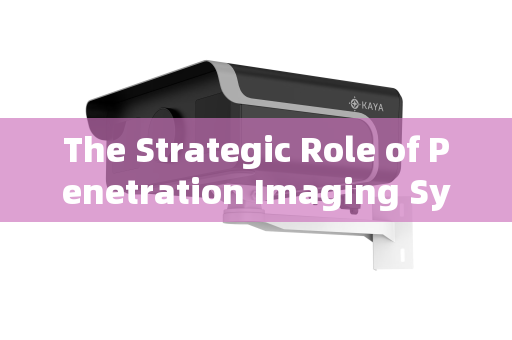
Penetration Imager Effect Images
Perimeter Security and Situational Awareness: For static or semi-static checkpoints guarding critical infrastructure, government buildings, or event perimeters, PIS acts as a long-range sentinel. It can monitor approach vectors through smoke (potentially from incidents or obscurants used by adversaries), light foliage, or light atmospheric obstructions, providing early warning and enhancing the overall situational awareness of the security cordon.
Integration into Broader Security Architectures: The intelligence gathered by PIS—high-resolution imagery, 3D data, and target information—can be seamlessly fed into Smart City, Smart Security, and Command & Control platforms. This enables real-time data fusion with facial recognition (where legal and for overt systems), vehicle tracking databases, and other sensor feeds, creating a comprehensive and intelligent urban security network where checkpoint recon is a key node.
Components Enabling Mission Success
The tactical advantage of a PIS stems from its precision-engineered components:
- Pulsed Laser Illuminator: Provides the controlled, high-power light source.
- Gated Intensifier Camera: The core sensor, incorporating a Microchannel Plate (MCP) for signal amplification exceeding 10^6 gain, a high-voltage module, and ultra-precise timing/gating electronics enabling shutter speeds below 3 nanoseconds.
- Beam Expander & Imaging Lens: Shape the laser output and collect returning light for optimal performance at range.
Conclusion
In the high-stakes, dynamically challenging environment of the urban checkpoint, the Penetration Imaging System transcends the limitations of conventional optics. By delivering clear, actionable intelligence through barriers and adverse conditions, it empowers security forces to conduct safer, more informed, and more effective reconnaissance. It shifts the operational paradigm from reactive to proactive, allowing threats to be identified and assessed before they reach the immediate vicinity of the checkpoint. As urban security challenges evolve, the PIS stands as a pivotal technology for ensuring public safety, protecting frontline personnel, and maintaining security resilience in the face of complexity and concealment. Its role is not merely observational but fundamentally strategic, enhancing deterrence, enabling precise intervention, and solidifying the integrity of urban security perimeters.