In the evolving landscape of public safety and security infrastructure, checkpoints at parks, critical facilities, and secured perimeters serve as vital first lines of defense. The effectiveness of these control points hinges on the ability to detect potential threats swiftly, accurately, and without disrupting legitimate flow. Herein lies the transformative role of the Penetration Imaging System (PIS), an advanced electro-optical technology redefining situational awareness and non-invasive inspection capabilities.
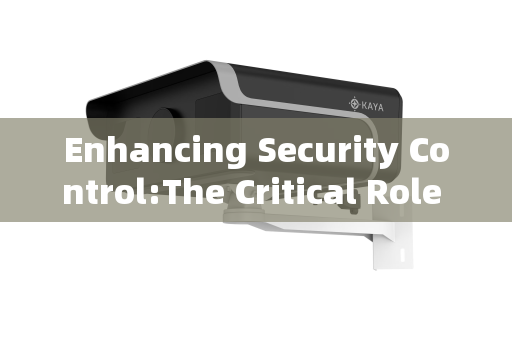
Penetration Imager Effect Images
Understanding Penetration Imaging Systems
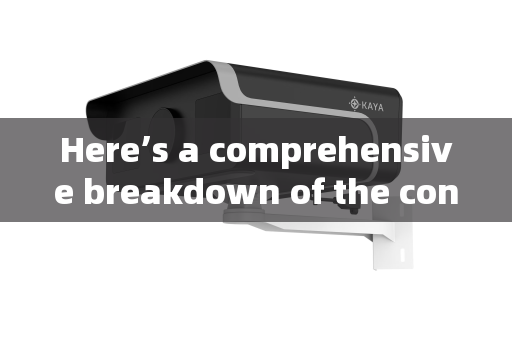
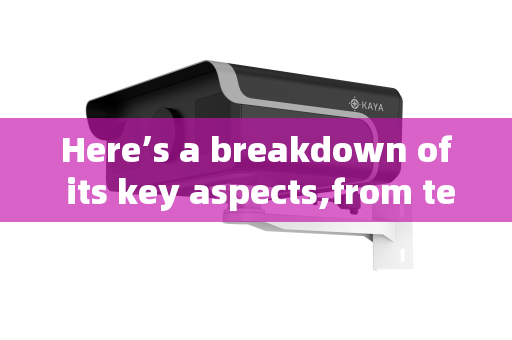
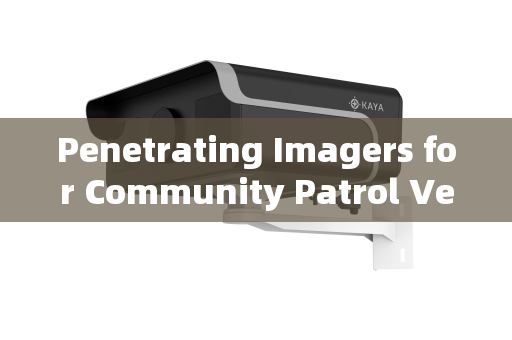
A Penetration Imaging System is a sophisticated surveillance and detection tool that utilizes advanced Laser Range-Gated Imaging (LRGI) or Gated Imaging technology. Its core innovation is the precise synchronization of a high-repetition-rate pulsed laser with a gated image-intensified camera. By controlling the nanosecond-level time delay between the laser pulse emission and the camera's shutter opening, the system can selectively image specific "slices" of space based on distance. This process, akin to stacking temporally resolved slices, constructs a clear image of the target zone.
This technical approach confers exceptional advantages crucial for security applications:
- Extended Imaging Range & High Distance Resolution: It can visualize targets at significant distances with precise depth discrimination.
- Superior Contrast & Anti-Interference: It effectively overcomes backscatter from atmospheric particles, delivering high-contrast images where conventional cameras fail.
- Media Penetration Capability: A defining feature is its ability to "see through" various obscurants and interfaces. This includes penetrating vehicle windows (car, train, aircraft), glass facades, and special glass types, as well as compensating for adverse conditions like fire, smoke, rain, snow, fog, and haze. It also holds potential for underwater imaging.
- Low/Zero-Light Operation: It performs impeccably in darkness or extremely low-light scenarios, enabling 24/7 surveillance.
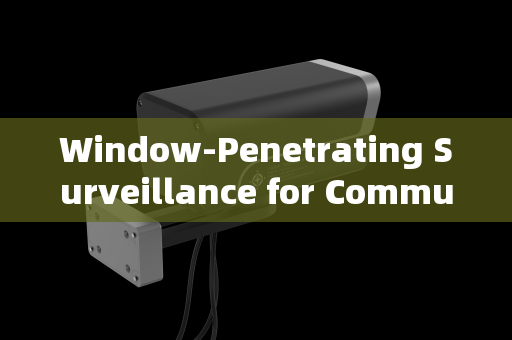
The system typically comprises a pulsed laser illuminator, a gated/intensified camera (incorporating a Microchannel Plate - MCP - intensifier, high-voltage module, timing module, and gating circuitry for >10^6 optical gain, <3ns optical gating, and superior to 10ps synchronization precision), beam expander, and imaging lenses.
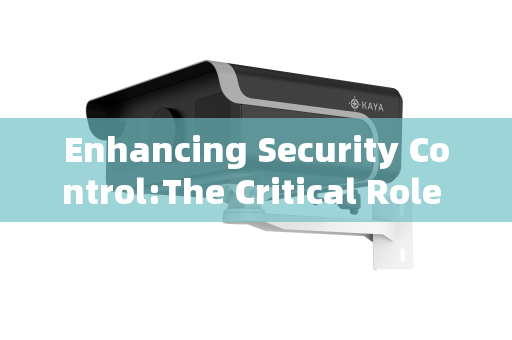
Penetration Imager Effect Images
Pivotal Role in Park Checkpoint Security Control
At park checkpoints—which may control access to government compounds, critical infrastructure perimeters, large public parks, or secure institutional grounds—the PIS acts as a force multiplier for security personnel.
-
Non-Invasive Vehicle Screening: One of the most critical applications is the covert and standoff inspection of vehicles approaching or within the checkpoint. The system can passively scan vehicles from a distance, penetrating standard and tinted windows to identify:
- Occupant Behavior & Threats: Detect the number of occupants, their movements, and potentially identify visible weapons or suspicious packages inside the cabin without alerting the subjects.
- Contraband Detection: Reveal items on seats or floors that may be obscured from direct view.
- Enhanced Situational Awareness: Provide clear imagery of the vehicle's interior under any lighting or weather condition, informing guard response before direct interaction.
-
Perimeter Surveillance through Obscurants: Parks often have expansive perimeters with variable terrain. The PIS's ability to image through foliage, light fog, or precipitation allows for effective monitoring of boundary areas, detecting intrusions or suspicious activities that would otherwise be hidden.

Penetration Imager Effect Images
-
Operation in Total Darkness: For checkpoints operating at night where overt lighting might be tactically undesirable, the PIS enables complete dark operation. Security teams can maintain visual oversight without revealing their own observational posts or blinding cameras with visible lights.
-
Rapid Response to Emergency Scenarios: In the event of a security incident within the park grounds (e.g., a hostile actor, a fire), the system can aid in tracking and assessing the situation through smoke, darkness, or from behind windows, providing critical intelligence to first responders and tactical teams.
Broader Application Context
The utility of Penetration Imaging Systems extends far beyond static checkpoints, underscoring their value across the security and emergency response spectrum:
- Emergency & Rescue Scenarios: Vital for urban and wildland firefighting, mine/disaster rescue, and maritime salvage, allowing crews to locate victims and navigate through dense smoke, flames, or water.
- Law Enforcement & Military Operations: Essential for counter-terrorism, tactical reconnaissance, surveillance, evidence collection, border patrol, anti-smuggling operations, and military engagements, offering a decisive advantage in obscured or denied-visibility environments.
- Coastal & Border Defense: Enables long-range surveillance through fog and provides glare suppression for monitoring maritime approaches, port security, and border areas in challenging weather.
- Smart City & Integrated Security: Contributes to next-generation smart safe city initiatives, intelligent policing, and critical infrastructure protection, integrating seamlessly with broader security networks.
Conclusion
At park checkpoints and analogous security control points, the Penetration Imaging System transcends the limitations of conventional optical and thermal systems. By delivering clear, actionable visual intelligence through barriers and adverse environmental conditions, it empowers security forces to make informed decisions, enhance proactive threat detection, and maintain a robust security posture. Its role is not merely observational but fundamentally transformative, shifting security operations from reactive to predictive and intelligence-driven. As threats evolve and the demand for unobtrusive yet powerful surveillance grows, penetration imaging technology stands as a cornerstone of modern, effective security control architectures.