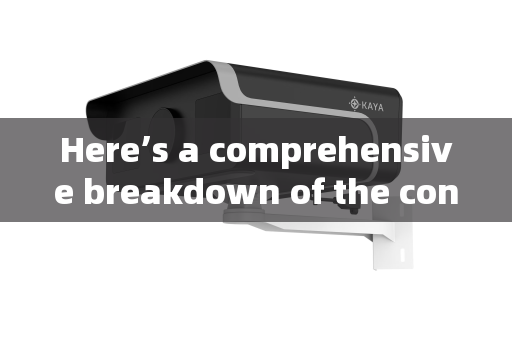
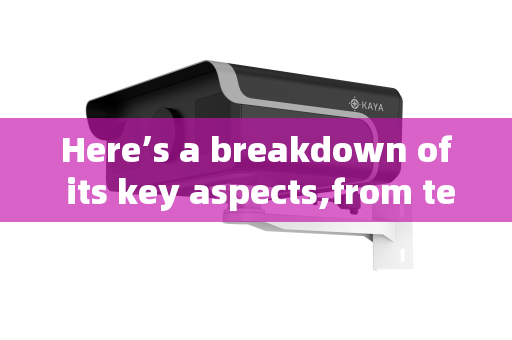
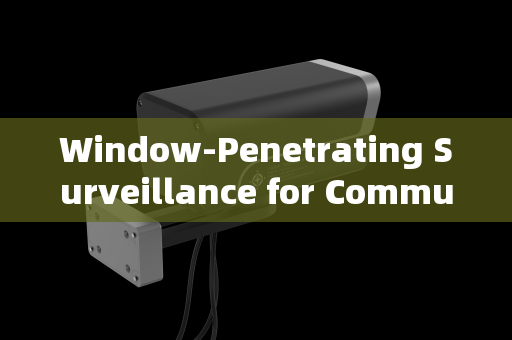
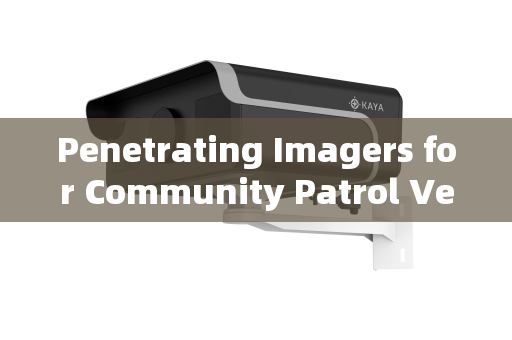
In the high-stakes domain of counter-terrorism operations, success hinges on superior intelligence and situational awareness. The element of surprise, officer safety, and mission efficacy often depend on the ability to "see the unseen" before breaching a hostile environment. This is where advanced penetration imaging systems, leveraging cutting-edge laser range-gated imaging technology, have emerged as a game-changing asset for pre-raid reconnaissance of terrorist hideouts.

Penetration Imager Effect Images
Understanding the Technology: Seeing Through the Barrier
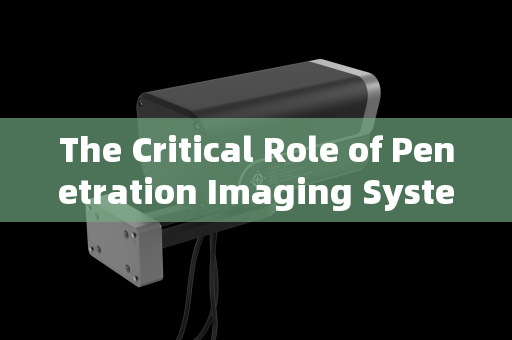
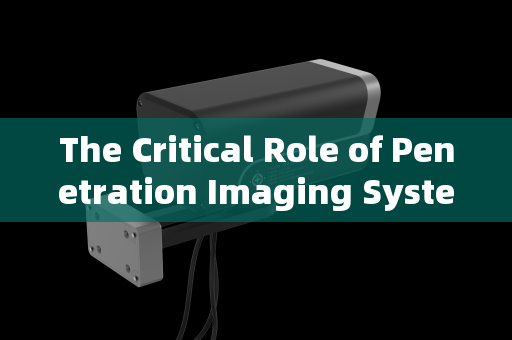
A penetration imaging system is not conventional optics. It is a sophisticated sensor suite designed to overcome the fundamental limitations of human vision and standard cameras in degraded visual environments (DVEs). At its core, it utilizes a synchronized combination of a high-repetition-rate pulsed laser and a gated, intensified camera. The principle, known as time-gating or range-gating, is revolutionary: the system emits nanosecond-duration laser pulses and precisely controls the camera's ultrashort shutter (under 3ns) to open only when light reflected from a specific, predetermined "slice" of distance returns. By sequentially scanning through these time/distance slices, the system constructs a high-contrast image of objects within that selected zone while effectively rejecting scattered light from obscurants in front of or behind the target plane.
This technology delivers unparalleled capabilities: extreme long-range imaging, high distance resolution, powerful anti-interference performance, and the critical ability to suppress backscatter from obscurants. Its most tactically relevant feature is the capacity to passively "see through" various types of glass (vehicle windows, building facades, armored glass, aircraft portholes) and penetrate media such as smoke, fog, haze, light rain, and snow. This allows for the covert detection and assessment of targets behind barriers or in conditions of near or total darkness.
Penetration Imager Effect Images
The Pre-Raid Imperative: From Uncertainty to Actionable Intelligence
When planning an assault on a suspected terrorist safe house, commanders face a daunting information gap. Traditional surveillance might confirm location but reveals little about the interior: the number and positioning of hostiles, the presence of hostages, defensive barricades, improvised explosive devices (IEDs), weapons caches, or the layout itself. Sending in personnel or robots blind carries catastrophic risk.
Penetration imaging systems bridge this gap decisively during the critical pre-raid phase. Deployed from a concealed stand-off position, these systems enable:
Penetration Imager Effect Images
- Covert Interior Layout Mapping: Operators can scan windows from a distance to generate floor plan sketches, identify rooms, corridors, and potential entry/exit points not visible from the outside.
- Hostile Force Assessment: Determining the number, approximate location, and activity patterns of individuals inside without alerting them. Distinguishing between combatants and non-combatants becomes more feasible.
- Threat Identification: Detecting the outlines of weapons, suspicious packages (potential IEDs), or defensive preparations (furniture barricades) through windows or smoke-filled rooms following a deliberate triggering of alarms.
- Hostage Situation Clarity: In barricade/hostage scenarios, verifying the presence, location, and condition of hostages is paramount for planning a rescue assault or negotiating.
- Obscured Environment Operations: If terrorists use smoke grenades or a fire starts during the initial phase, the system can maintain visual contact through the obscuration, allowing commanders to maintain awareness and guide the assault team.
Tactical Integration and Operational Advantages
The integration of this technology into special operations and tactical police units transforms pre-raid procedures. It moves reconnaissance from speculative to sensory. Operatives can use handheld or tripod-mounted systems for close-quarter scans or integrate them into mobile platforms for broader area assessment.
The benefits are profound:
- Enhanced Officer/Operator Safety: Reduced risk of ambush and better-prepared entries lead to fewer casualties.
- Increased Mission Success Probability: With precise interior knowledge, assault plans can be more accurate, swift, and effective.
- Preservation of Evidence: Allows for observation of suspect activities prior to entry, which can be crucial for later prosecution.
- Negotiation Leverage: In standoff situations, real-time intelligence on inside activities provides a significant advantage to negotiators and assault coordinators.
- 24/7, All-Weather Capability: Its functionality in darkness and through light atmospheric obscurants makes it a reliable tool for any time and in most climatic conditions.
Conclusion
In the relentless fight against terrorism, technological superiority is a key determinant of success. Penetration imaging systems, with their ability to deliver clear, actionable intelligence by seeing through visual barriers, have redefined the possibilities of pre-raid reconnaissance. They turn the opaque walls of a terrorist hideout into a source of critical information, empowering commanders to make informed decisions, safeguarding the lives of both operatives and potential victims, and ensuring that tactical assaults are executed with maximum precision and minimum risk. As this technology continues to evolve, its role as a cornerstone of modern counter-terrorism and tactical law enforcement operations will only become more indispensable.