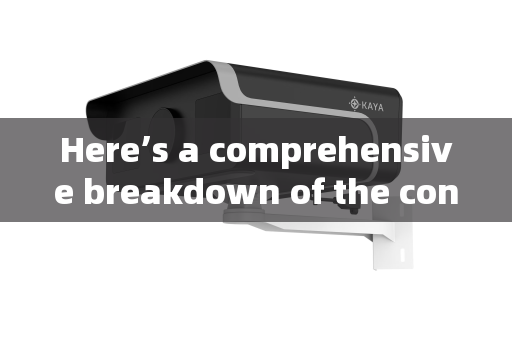
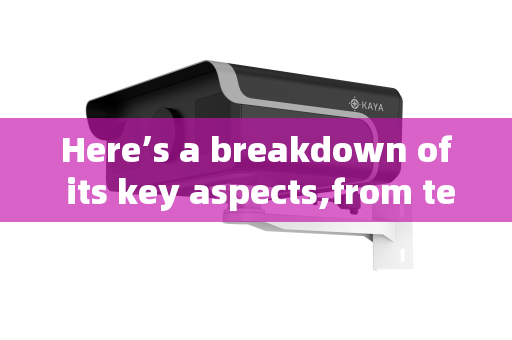
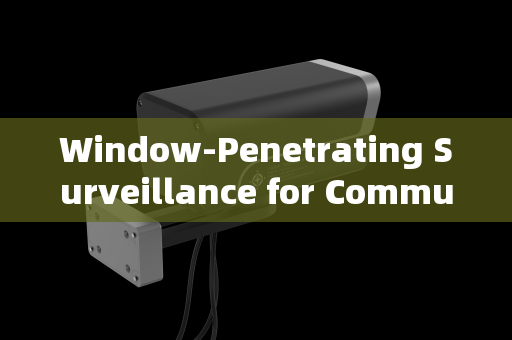
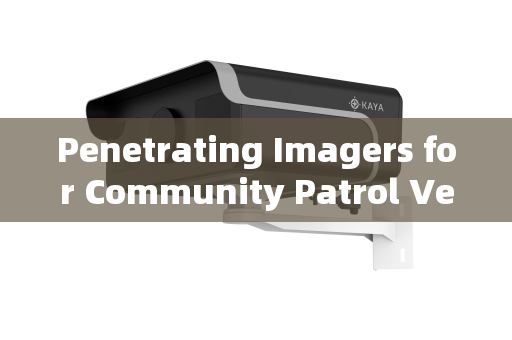
Revolutionizing Airport Security: The Penetration Imaging System's Critical Role in Surveillance and Threat Detection In an era where global aviation faces increasingly sophisticated threats—from terrorism and smuggling to onboard disturbances and clandestine activities—airport security monitoring demands technological solutions that transcend conventional capabilities. Traditional surveillance and inspection systems, while essential, often struggle with limitations imposed by environmental conditions, physical obstructions, or the simple need for discretion. Enter the Penetration Imaging System (PIS), a groundbreaking technology that is redefining the boundaries of airport security by providing unparalleled visual intelligence in the most challenging scenarios. By leveraging advanced Laser Range-Gated Imaging (LRGI) technology, this system acts as a strategic force multiplier, offering security personnel the ability to "see the unseen." At its core, the penetration imaging system is an ingenious fusion of high-repetition-rate pulsed lasers and gated intensifier cameras. The operational principle is based on precise, nanosecond-level time synchronization between a pulsed laser illuminator and the camera's shutter. By emitting short, intense laser pulses and then opening the camera's "gate" only for the precise moment when light reflected from a specific distance slice returns, the system effectively performs optical sectioning. It stacks these temporal slices to construct a high-contrast image of a target scene. This method, akin to peeling back layers of visual interference, grants the PIS its defining characteristics: extreme long-range imaging capability, high distance resolution, superior resistance to backscatter, and formidable performance against various obscurants. For airport security, these technical attributes translate into decisive operational advantages across multiple domains: Aircraft Perimeter and Cabin Surveillance: A primary application is the external screening of parked aircraft. Security teams can use a PIS to discreetly conduct stand-off inspections through aircraft cabin windows (aircraft portholes) and specialized glass panes from a significant distance, even in total darkness or adverse weather. This allows for the detection of potential stowaways, suspicious items left on seats, or unauthorized personnel inside a secured plane on the tarmac without alerting them or requiring physical boarding, thereby maintaining a tactical advantage. Terminal Infrastructure and Restricted Zone Monitoring: Airports feature vast expanses of glass curtain walls, tinted windows, and partition glasses in terminals, control towers, and secured offices. Smuggling activities or unauthorized access attempts might occur behind these transparent barriers. A penetration imaging system can "see through" these surfaces from a remote position, enabling continuous monitoring of sensitive areas like baggage handling zones, customs inspection halls, or equipment rooms for illicit activities without intrusive physical patrols that could tip off perpetrators. All-Weather, All-Condition Threat Detection: Airports operate 24/7, facing fog, rain, snow, and haze—conditions that severely degrade standard CCTV and thermal cameras. The PIS's ability to penetrate atmospheric obscurants like fog, mist, rain, and light smoke ensures uninterrupted surveillance of perimeter fences, runways, and cargo areas. Its resistance to backscatter prevents the "white-out" effect common with conventional lasers in particulate matter, guaranteeing clear imaging for identifying potential intruders or dropped contraband near critical infrastructure. Vehicle and Cargo Inspection Enhancement: While not replacing primary X-ray or CT scanners, a PIS can serve as a complementary tool for rapid preliminary scans. It can potentially peer through the windows of refueling trucks, catering vans, or cargo containers parked at a distance to identify anomalies, count occupants, or detect hidden compartments before the vehicle approaches closer inspection bays, streamlining the security funnel and allocating resources more efficiently. Counter-Terrorism and Law Enforcement Operations: In a crisis, such as a suspected hijacking or the presence of a hostile actor within the airport complex, the PIS becomes an invaluable tool for covert reconnaissance and intelligence gathering. Tactical teams can assess the situation inside rooms or vehicles through windows from a safe stand-off distance, identifying threats, counting hostages, or mapping layouts without exposing themselves, thereby critically informing breach and rescue strategies. The system's architecture, comprising a pulsed laser emitter, beam expander, imaging lens, and a gated intensifier camera with a Microchannel Plate (MCP) and precision timing modules, is engineered for field reliability. The MCP provides optical gains exceeding 10^6, while gate widths below 3 nanoseconds and synchronization precision better than 10 picoseconds enable the capture of exceptionally clear, depth-resolved images. Beyond the immediate airport environment, the technology's pedigree in emergency response (urban/forest firefighting, search and rescue in smoke-filled environments) and military/police operations (counter-terrorism, surveillance, evidence collection, maritime patrol in fog) underscores its robustness and versatility. Its capabilities in underwater imaging** further expand its potential for inspecting submerged portions of airport structures or in port security aspects of airport maritime facilities. In conclusion, the role of the penetration imaging system in airport security monitoring is transformative. It moves surveillance from passive observation to active, intelligent penetration of visual barriers. By delivering reliable, high-resolution imaging intelligence through glass and environmental clutter over long ranges, the PIS fills a critical gap in the security apparatus. It empowers authorities to proactively detect threats, conduct covert investigations, and maintain constant vigilance regardless of lighting or weather, thereby fortifying the multi-layered defense of the aviation ecosystem and ensuring the safety of passengers, personnel, and assets. As security challenges evolve, the penetration imaging system stands as a pivotal technology in the quest for a more secure and resilient global aviation network.
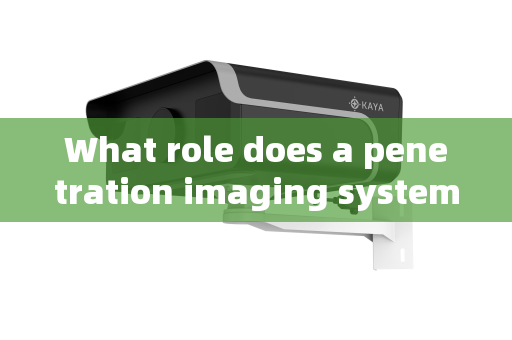
Penetration Imager Effect Images
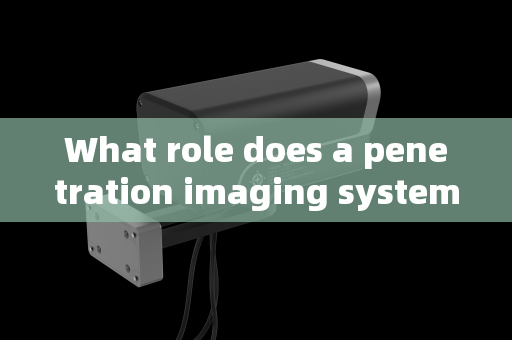
Penetration Imager Effect Images
Penetration Imager Effect Images