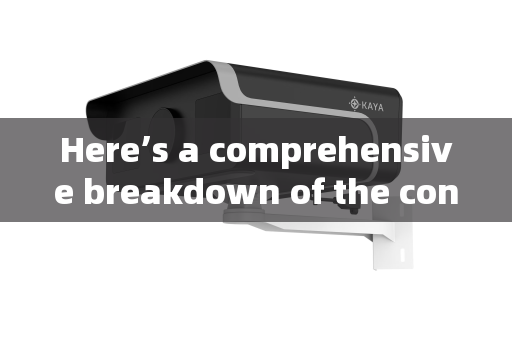
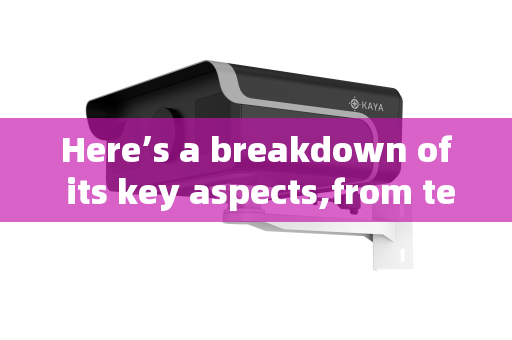
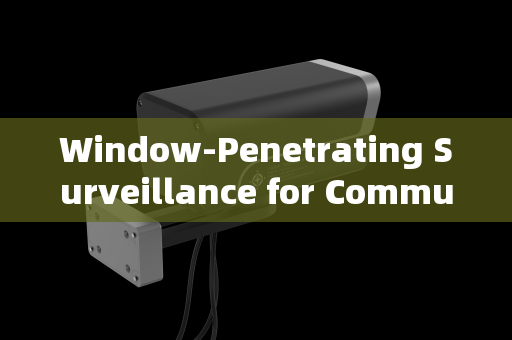
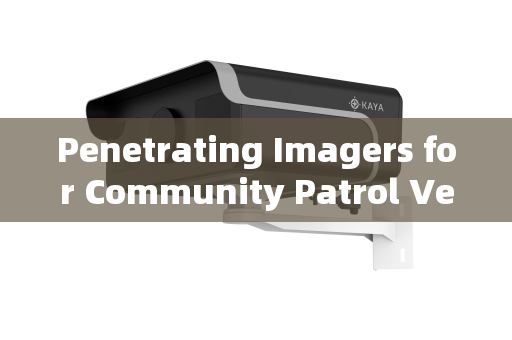
Urban gang activities present a persistent and complex challenge to law enforcement and public safety agencies worldwide. These groups often operate in the shadows, utilizing dense urban environments, vehicles with tinted windows, and adverse conditions like darkness or obscurants to conceal their movements, transactions, and weaponry. Traditional surveillance methods—relying on visible-light cameras, human observation, or standard night-vision equipment—frequently fall short in such scenarios due to visual barriers and environmental limitations. This is where advanced penetration imaging systems emerge as a critical technological force multiplier, fundamentally enhancing the capability to monitor, investigate, and counter urban gang operations.
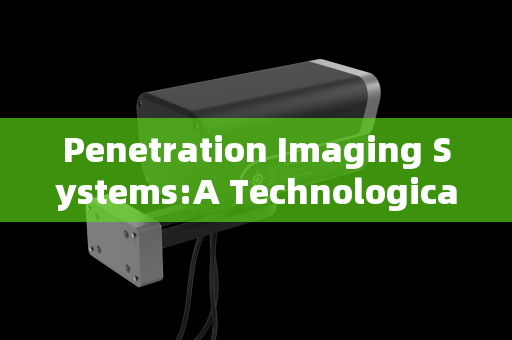
Penetration Imager Effect Images
Understanding Penetration Imaging Technology
A penetration imaging system is not a conventional camera. It is a sophisticated, active imaging platform engineered to "see through" visual obstructions that normally shield clandestine activities. At its core, it employs Laser Range-Gated Imaging (LRGI) or gated imaging technology. The system innovatively integrates a high-repetition-rate pulsed laser with a gated intensifier camera. By achieving precise nanosecond-level synchronization between the laser pulse and the camera's ultra-fast electronic shutter, the system captures light reflected only from a specific, narrow "slice" of space at a predetermined distance.
This time-slicing technique allows it to reject backscattered light from interfering elements like fog, smoke, rain, or dust—which plague conventional imaging—and to penetrate transparent and semi-transparent barriers. Key technical components include a pulsed laser, a beam expander, an imaging lens, and the crucial gated intensifier camera. This camera incorporates a Microchannel Plate (MCP) image intensifier, high-voltage modules, and precision timing circuitry, enabling optical gains exceeding 10^6, shutter speeds under 3 nanoseconds, and timing synchronization precision better than 10 picoseconds. The result is a system capable of high-contrast, long-range imaging that effectively overcomes backscatter and penetrates various media.
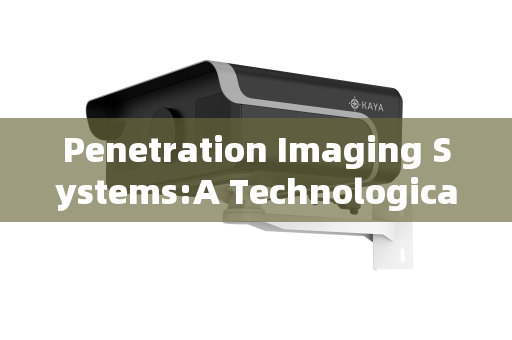
Penetration Imager Effect Images
Primary Capabilities Relevant to Gang Activity Monitoring:
- Penetration of Visual Barriers: It can covertly image through vehicle windows (including tinted glass), building glass facades, and other transparent partitions. This allows officers to visually assess the interior of a suspected gang vehicle—counting occupants, identifying weapons, or observing transactions—without alerting the subjects inside.
- Operation in Extreme Conditions: The system excels in low-light and no-light environments, precisely when gangs are most active. Furthermore, its ability to see through obscurants like smoke (from fires or deliberate screens) and adverse weather (fog, haze) ensures surveillance continuity during critical incidents or in polluted urban settings.
- Long-Range, Covert Surveillance: With extended imaging ranges and minimal observable signature (especially when using eye-safe lasers in specific wavelengths), it enables law enforcement to maintain a safe stand-off distance while gathering vital intelligence on gang meetings, lookout posts, or movements in sensitive areas.
Application in Law Enforcement Scenarios Against Urban Gangs
The integration of penetration imaging systems into police and homeland security frameworks significantly augments capabilities across several key operational domains:
Penetration Imager Effect Images
- Covert Surveillance and Intelligence Gathering: For investigations and evidence collection, these systems allow detectives to monitor suspected gang safe houses, stash locations, or transaction points through windows from a concealed position. Observing activities inside vehicles parked in known gang territories can provide probable cause for further action or yield evidence of weapons possession or drug handling.
- Tactical Assault and Hostage Rescue Preparation: In counter-terrorism and raid scenarios where gangs may be barricaded, the system can provide initial interior visualization through windows or glass doors. Tactical teams can gather information on occupant numbers, positions, and potential threats (visible weapons) before breaching, dramatically enhancing officer safety and operational precision.
- Arson and Post-Blast Investigation: Gang-related violence often involves arson or explosives. During firefighting and urban search and rescue (USAR) operations, penetration imaging can see through smoke and flames to locate victims or assess structural integrity. Following an explosion, it can help investigators safely peer into unstable structures through shattered windows.
- Traffic Interdiction and Checkpoint Security: At vehicle checkpoints aimed at intercepting gang movement of weapons or contraband, a system mounted on an overhead gantry or patrol vehicle can quickly scan approaching cars. It can detect concealed individuals in trunks (through rear windows) or identify weapon-shaped objects inside the passenger cabin, providing real-time alerts to officers on the ground.
- Port and Border Security: Useful in maritime and border patrol operations to combat gang-related smuggling. It can scan the interiors of shipping containers with glass viewing ports or inspect cabins of vehicles on ferries through their windows, even in foggy or dark conditions at sea or in port.
Integration into Smart City and Policing Initiatives
For Smart City, Smart Policing, and Smart Security infrastructures, penetration imaging systems represent a next-generation sensor node. When integrated with network-centric command centers, data from these systems can be fused with other intelligence (e.g., gunshot detection, license plate recognition, gang member databases). This creates a comprehensive common operating picture, enabling predictive policing models, faster response to gang-related incidents, and more effective resource deployment in high-risk areas.
Conclusion
The penetration imaging system transcends the role of a simple optical device; it is a transformative surveillance and reconnaissance asset. In the relentless struggle against urban gang activities—characterized by evasion, intimidation, and operation in legally and physically obscured spaces—this technology provides a decisive advantage. By delivering clear, actionable visual intelligence through barriers and in conditions where traditional methods fail, it empowers law enforcement agencies to conduct safer, more effective, and more evidence-led operations. From proactive intelligence gathering to critical tactical interventions, the penetration imaging system is proving indispensable in enhancing urban security, protecting communities, and upholding the rule of law in the complex theater of modern cities.