Introduction
The critical question—“Can a penetration imaging system penetrate flames for imaging during fire rescue?”—is not merely theoretical. In fire rescue operations, visibility is often obliterated by dense smoke, intense flames, and chaotic debris. Traditional thermal and optical cameras face severe limitations under such extreme conditions. However, advancements in laser-based imaging technologies are now providing a resounding “yes.” Penetration imaging systems, specifically those employing laser range-gated imaging (LRG) or gated imaging techniques, are revolutionizing situational awareness in firefighting and emergency response.
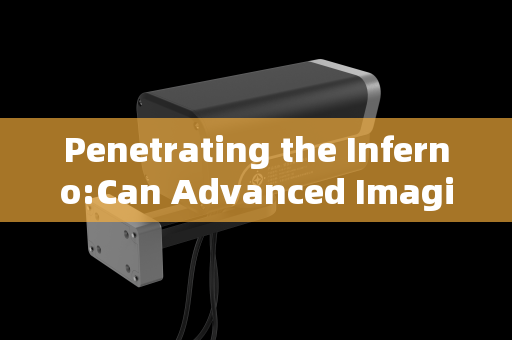
Penetration Imager Effect Images
Understanding Penetration Imaging Systems
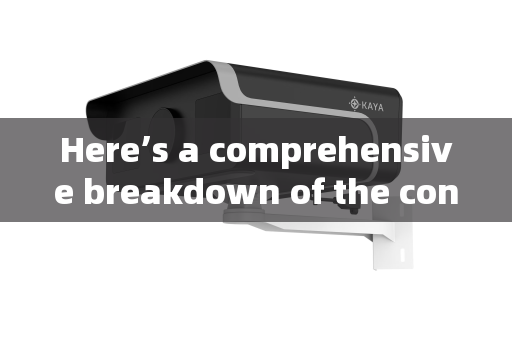
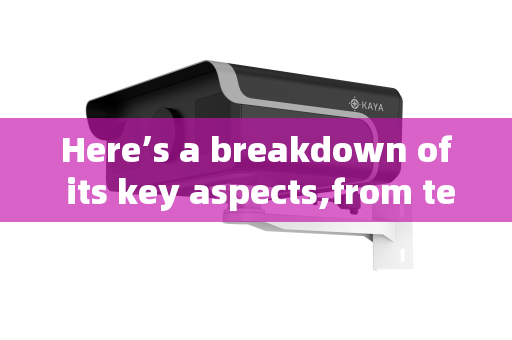
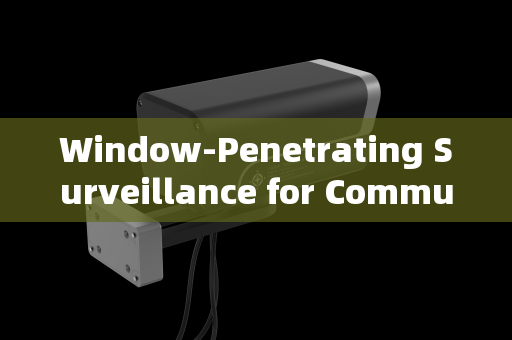
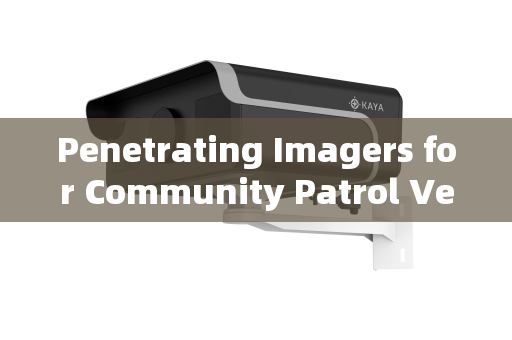
A penetration imaging system is designed to acquire clear visual information through obscurants and mediums that typically block or scatter light. At its core, it integrates a high-repetition-rate pulsed laser and an image-intensified gated camera. The system operates by emitting short, intense pulses of laser light and synchronizing the camera’s shutter to open only for the precise moment when the reflected light from the target returns. By controlling the time delay between the laser pulse and the camera’s gating window, the system can effectively “slice” and image specific distance segments, rejecting scattered light from intervening media like smoke, fog, or, notably, flames.
Key technical components include:
- Pulsed Laser: Provides high-power, nanosecond-duration illumination.
- Gated Image-Intensifier Camera: Incorporates a microchannel plate (MCP) intensifier, high-voltage modules, and precision timing circuits. This enables optical gains exceeding 10⁶, shutter speeds below 3 nanoseconds, and synchronization precision better than 10 picoseconds.
- Beam Expander & Imaging Lens: Directs and collects light efficiently.
This configuration allows the system to achieve long-range, high-contrast imaging with exceptional resistance to backscatter, making it effective in low-light, no-light, or harsh environments.
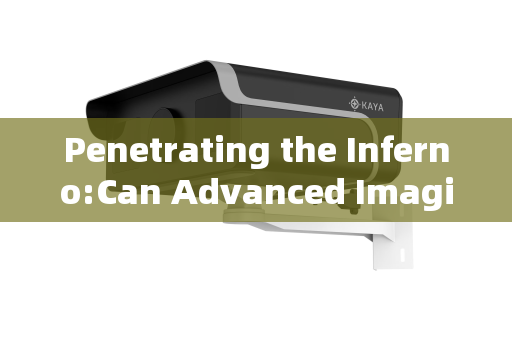
Penetration Imager Effect Images
Penetrating Flames: The Technical Feasibility
Flames present a unique challenge: they emit intense broadband radiation (visible and infrared) and contain turbulent, light-scattering particles. Conventional imaging is often blinded by this glare. A penetration imaging system tackles this by:
- Spectral Selection: Using laser wavelengths that are less absorbed by flame constituents (e.g., specific near-infrared bands).
- Time-Gating: The ultrashort gating window captures only light reflected from objects behind the flame front. Since the laser pulse passes through flames quickly and the camera gates open after the pulse interacts with the target, the continuous emission from flames is largely excluded.
- Rejecting Scatter: Light scattered by particles within the flame is not synchronized with the gate and is thus suppressed.
This enables responders to “see through” flame curtains to identify structural elements, hazards, or victims that would otherwise be invisible.
Application Scenarios in Emergency Response
In fire rescue, these systems are transformative:
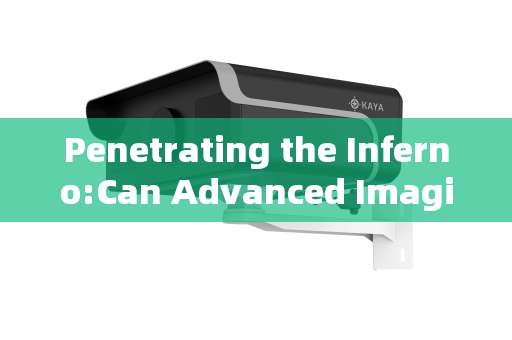
Penetration Imager Effect Images
- Urban & Industrial Firefighting: Penetrating smoke and flame fronts to locate casualties, assess structural integrity, and identify fire sources.
- Forest & Wildfire Management: Mapping fire boundaries and spotting hotspots through dense smoke.
- Marine & Aviation Incidents: Imaging through cabin or hull fires.
- Training & Simulation: Integrating into live-fire training systems for realistic, high-fidelity scenario preparation.
By delivering real-time visual intelligence, penetration imaging reduces operational risks, accelerates victim recovery, and enhances decision-making.
Broader Operational Horizons
Beyond fire rescue, these systems serve critical roles in:
- Law Enforcement & Military: For surveillance, forensic investigation, counter-terrorism, and securing perimeters through visual barriers like windows, fog, or foliage.
- Border & Coastal Security: Enabling long-range observation in adverse weather (fog, rain, haze) and providing glare suppression against bright lights.
- Smart City & Critical Infrastructure Protection: Monitoring high-value assets through glass facades or in poor visibility.
- Underwater & Subsurface Imaging: Assisting in submerged search and recovery missions.
Conclusion
The capability of penetration imaging systems to “see through” flames during fire rescue is no longer speculative but a proven technological reality. By leveraging precision laser gating and ultra-sensitive detection, these systems cut through visual chaos to reveal critical details, directly enhancing responder safety and mission efficacy. As the technology matures and becomes more accessible, its integration into standard emergency response protocols will undoubtedly save lives, making the impossible possible—one laser pulse at a time.
Future Outlook
Ongoing research aims to make systems more compact, affordable, and adaptable to diverse emergency scenarios. With integration into drone platforms and wearable equipment, penetration imaging is poised to become an indispensable tool in the global public safety arsenal, redefining the limits of visibility in the most unforgiving environments.