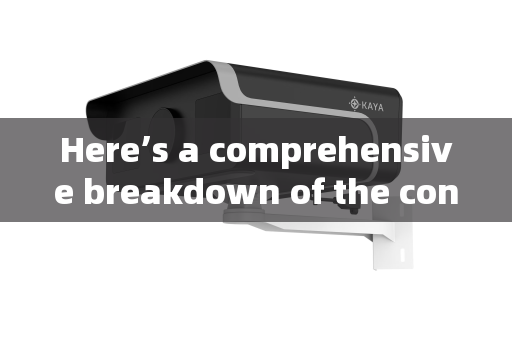
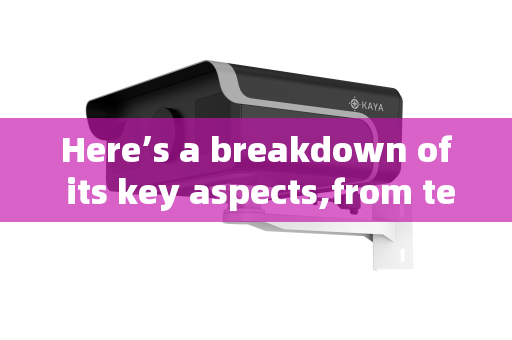
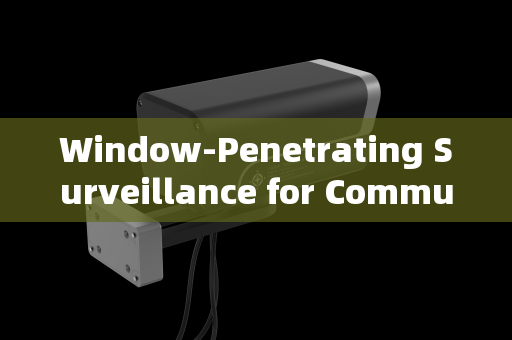
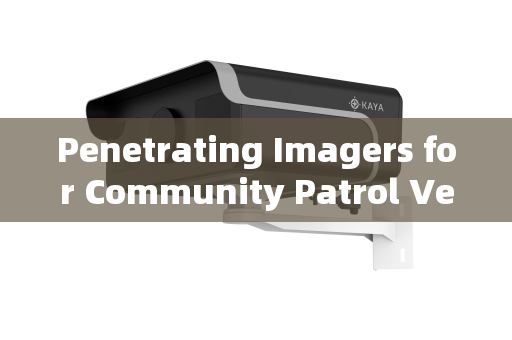
In the chaotic and life-threatening environment of a fire, visibility is often the first casualty. Dense smoke, intense heat, and blinding flames create a zero-visibility shroud, severely hampering search and rescue efforts, endangering both victims and first responders. A critical question arises: Can a penetration imaging system penetrate smoke for imaging during fire rescue? The answer is a definitive yes. Advanced penetration imaging systems, leveraging cutting-edge laser range-gated imaging technology, are revolutionizing firefighting and emergency response by providing clear vision through obscurants like smoke, fog, and even direct flame.
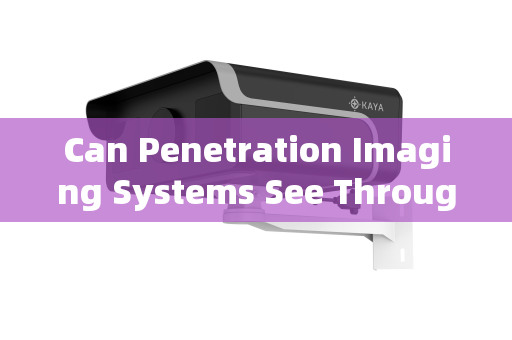
Penetration Imager Effect Images
Understanding Penetration Imaging: Technology and Function
A penetration imaging system is not a conventional thermal or infrared camera. It is a sophisticated active imaging device designed to acquire high-contrast visual information in extreme low-light or completely obscured conditions. Its core innovation lies in the integration of "high-repetition-rate pulsed laser illumination + a gated intensifier camera."
The technology, known as Laser Range-Gated (LRG) or Gated Imaging, works on a precise time-slicing principle. The system emits powerful, ultrashort (nanosecond) pulses of laser light. A highly sensitive gated camera, synchronized with nanosecond precision to these laser pulses, acts as an ultrafast shutter. By controlling the precise time delay between the laser pulse emission and the camera shutter opening, the system selectively captures light reflected only from a specific, narrow "slice" of space at a predetermined distance. This process, repeated and stacked, builds a clear image of the target zone.
This method delivers several breakthrough advantages crucial for rescue operations:
Penetration Imager Effect Images
- Suppression of Backscatter: It effectively eliminates backscattered light from particles (smoke, dust, fog, rain) close to the camera, which normally washes out the image. Only light from the targeted distance slice is collected.
- Long-Range, High-Resolution Imaging: It enables identification and reconnaissance at distances far beyond the capabilities of standard visible-light or even many thermal cameras.
- Versatile Penetration Capability: Beyond smoke and atmospheric obscurants, these systems can see through various types of glass (vehicle windows, building glass, aircraft portholes) without glare, and perform underwater imaging.
System Components: The Engineering Behind the Vision
A typical system comprises several key modules:
- Pulsed Laser Illuminator: Generates high-frequency, nanosecond-duration laser pulses.
- Beam Expander: Shapes and expands the laser beam for uniform area illumination.
- Gated Intensifier Camera: The core sensor. It incorporates a Microchannel Plate (MCP) image intensifier, a high-voltage module, and precise timing/gating electronics. This assembly can achieve an optical gain exceeding 10^6, an optical shutter speed faster than 3 nanoseconds, and timing synchronization precision better than 10 picoseconds.
- Imaging Lens: Gathers the returning light onto the camera sensor.
This combination allows for not only high-contrast 2D imaging but also the acquisition of precise 3D range data for each pixel, enabling accurate distance measurement and spatial mapping of the rescue environment.
Application Scenarios: Transforming Emergency and Tactical Response
Penetration Imager Effect Images
The primary application, as per the core keyword, is in Fire and Emergency Rescue:
- Urban & Industrial Firefighting: Locating casualties and navigating through smoke-filled structures, identifying structural integrity hazards, and pinpointing fire sources behind smoke or glass.
- Wildland Firefighting: Monitoring fire fronts through smoke, spotting hot spots, and searching for personnel in obscured terrain.
- Complex Rescue Ops: In incidents involving aircraft, trains, or ships, these systems can peer through windows and portholes to assess internal conditions before breach-and-entry, enhancing responder safety and mission planning. They are also vital for hazardous material (HazMat) incidents, mine rescues, and water rescue operations in poor visibility.
Beyond fire rescue, this technology has been rapidly adopted in Law Enforcement, Military, and Security sectors:
- Police & Counter-Terrorism: For covert surveillance, through-window intelligence gathering, anti-sniper detection, evidence collection in low-light, and operations in adverse weather (fog, rain).
- Border & Coastal Security: Providing long-range surveillance capability through fog and haze for maritime domain awareness, port security, and coastal patrol, ensuring operations continue in恶劣天气 (adverse weather).
- Critical Infrastructure Protection: Monitoring perimeters of high-value assets like power plants or government buildings in all weather conditions.
Furthermore, they serve high-level training needs in simulated fire training facilities and live-fire exercises, allowing instructors to safely monitor trainees inside smoke-filled environments.
Conclusion
The question of whether a penetration imaging system can penetrate smoke for fire rescue imaging is not merely theoretical. It represents a pivotal technological advancement already in field use. By mastering the dimension of time at the nanosecond level, these systems strip away visual barriers imposed by smoke, flame, and glass. They deliver the critical "sight" needed for informed decision-making in scenarios where every second counts, ultimately enhancing operational effectiveness and saving lives. For fire and rescue services, as well as tactical teams worldwide, penetration imaging is transitioning from a novel capability to an essential tool for operating in the world's most visually hostile environments.