In high-stakes emergency scenarios such as structural fires, industrial accidents, or search-and-rescue missions within obscured environments, a critical challenge for first responders is the inability to see through visually obstructive media like smoke, fog, dust, or intense precipitation. Conventional imaging and thermal systems often fail under these conditions due to severe backscatter, glare, or lack of contrast. Addressing this operational gap, advanced penetration imaging systems have emerged, leveraging a sophisticated physical principle known as Laser Range-Gated (LRG) Imaging or Gated Imaging Technology. This technology is fundamentally transforming situational awareness and target detection in rescue, security, and defense operations.
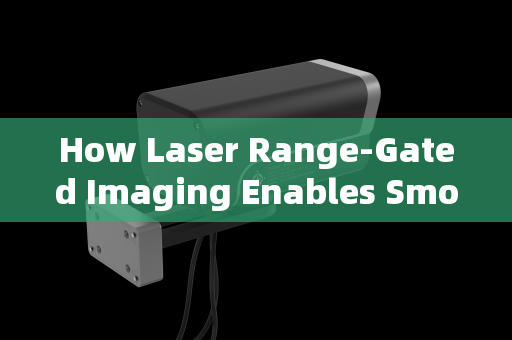
Penetration Imager Effect Images
Core Principle: Time-Sliced Illumination and Detection
The fundamental operating principle of a smoke-penetrating penetration imaging system is laser range-gating. This technique innovatively combines a high-repetition-rate pulsed laser with a gated intensifier camera, synchronizing their operation with nanosecond precision.
Here’s how it works:
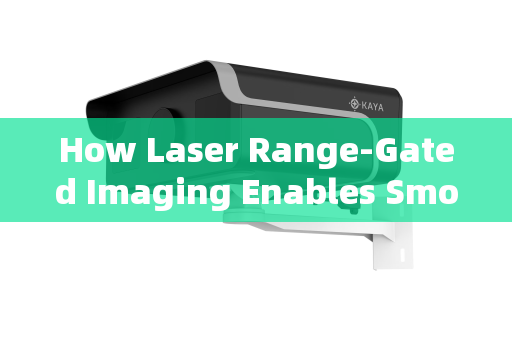
Penetration Imager Effect Images
- Pulsed Illumination: The system emits extremely short, powerful pulses of laser light (lasting nanoseconds) towards the target scene.
- Gated Reception: The camera’s sensor, specifically an intensified gated camera, remains electronically "closed" or off during the initial travel time of the laser pulse. This is crucial. As the pulse travels, it illuminates obscurants like smoke particles very close to the system, creating intense backscatter that would normally overwhelm a standard camera.
- Precision Timing & "Time Slicing": A high-precision timing module (with synchronization accuracy better than 10 picoseconds) controls the exact moment the camera's "gate" or electronic shutter opens—only for a few nanoseconds. This gate opens precisely when the laser pulse is reflecting off the desired target located at a specific distance, and closes before the backscattered light from nearby obscurants can return. By adjusting the time delay between the laser pulse and the camera gate, the system can selectively image a specific "slice" of space, effectively ignoring light from all other distances.
- Slice Stacking & Image Formation: By rapidly sweeping or stacking these temporally gated "slices" across different ranges, the system constructs a clear, high-contrast composite image of the target area, effectively "seeing through" the obscuring medium.
Key Technological Components and Capabilities
A typical penetration imaging system comprises:
- Pulsed Laser Illuminator: Provides high-power, eye-safe (in most designs) pulsed light.
- Beam Expander: Shapes and projects the laser beam to illuminate the field of view.
- Gated Intensifier Camera: The heart of the system. It integrates:
- Imaging Lens: Collects reflected light.
- Microchannel Plate (MCP) Image Intensifier: Provides optical gain exceeding 10^6 times, enabling imaging in extremely low-light or no-light conditions.
- Gating Module: Functions as an ultra-fast optical shutter (<3 ns).
- High-Voltage & Timing Control Modules: Enable precise synchronization and gating.
- Processing & Display Unit: For image enhancement and visualization.
This architecture grants the system exceptional capabilities:
Penetration Imager Effect Images
- Suppression of Backscatter: The core advantage, enabling vision through smoke, fog, haze, dust, rain, and snow.
- Long-Range Imaging: Enhanced by the powerful, directed laser illumination.
- High Range Resolution: Ability to distinguish objects at different distances.
- Passive & Active Penetration: Can image through various transparent barriers (vehicle glass, architectural windows, aircraft canopies) and in complete darkness.
- Water Penetration: Applicable for limited underwater imaging tasks.
Application Scenarios in Rescue, Security, and Defense
Emergency Response & Firefighting:
- Urban & Industrial Firefighting: Enables firefighters to navigate zero-visibility smoke-filled rooms, locate victims, identify structural hazards, and find the seat of a fire faster and more safely. It is invaluable for confined space rescue and chemical plant incidents.
- Wildland Firefighting: Supports aerial and ground reconnaissance through smoke to map fire fronts and spot crews.
- Disaster Search & Rescue (USAR): For locating survivors in collapsed buildings amid dust and debris.
- Maritime & Aquatic Rescue: Enhances capability to spot persons in water during night or foggy conditions.
Law Enforcement & Security:
- Counter-Terrorism & Hostage Rescue: Provides visual intelligence through windows, smoke grenades, or non-permanent obscurants during dynamic entries.
- Surveillance & Reconnaissance: Allows for covert, long-range observation through glass and light foliage in various weather conditions.
- Border & Perimeter Security: Enables 24/7 patrols and detection of intrusions in fog, rain, or snow.
- Traffic Safety & Inspection: Potential for seeing into vehicles under adverse conditions for security checks.
Maritime & Coastal Defense:
- Naval Operations: Critical for navigation, threat identification, and surveillance in heavy fog, mist, or precipitation, ensuring operational continuity during poor visibility.
- Port & Coastal Security: Monitors vessel traffic, docks, and critical infrastructure through obscuring weather.
- Search and Rescue (SAR) at Sea: Dramatically improves the ability to locate life rafts, vessels, or individuals in poor weather and low-light conditions.
In conclusion, penetration imaging systems achieve their life-saving, smoke-penetrating capability through the precise laser range-gating principle. By mastering the dimension of time at the nanosecond level, these systems filter out debilitating backscatter to reveal critical details hidden within visually hostile environments. As this technology matures and becomes more integrated into the operational toolkit of first responders, military units, and security agencies, it represents a significant leap forward in preserving life, enhancing mission effectiveness, and operating decisively in the world's most challenging visual conditions.