Piercing the Inferno: The Technology and Tactical Advantages of Penetration Imaging Systems in Fire and Crisis Response In high-stakes emergency response, military operations, and security details, visibility is not just an advantage—it is often the deciding factor between mission success and catastrophic failure. One of the most formidable visual obstacles is the dynamic, intense interference caused by flames and combustion byproducts. Traditional thermal and optical imaging systems are frequently blinded or severely degraded by the intense radiation and scattering within fiery environments. This is where advanced Penetration Imaging Systems** step in, offering a revolutionary capability to "see through" flames and other obscurants, providing critical visual intelligence where it was once thought impossible.
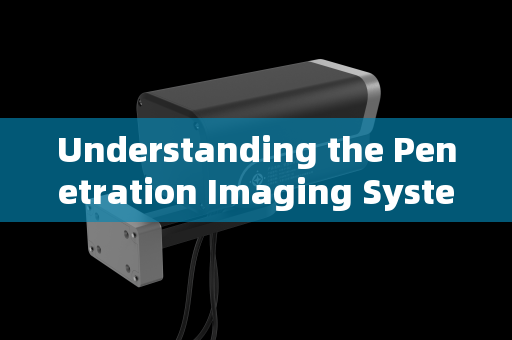
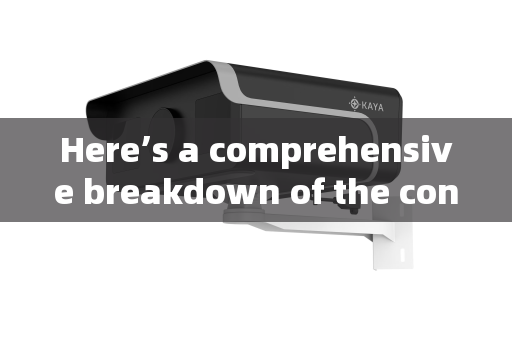
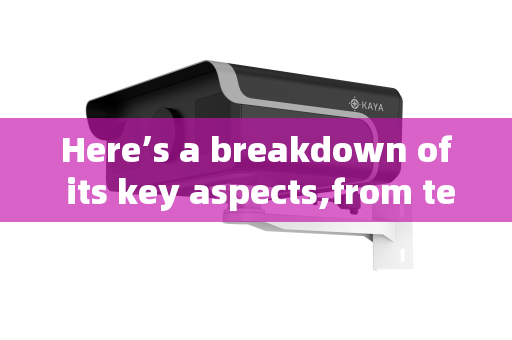
Penetration Imager Effect Images
At its core, a Penetration Imaging System is a sophisticated electro-optical device engineered to acquire clear, high-contrast imagery of targets located behind visually opaque media. These media include not only flames but also smoke, fog, haze, rain, snow, and even certain types of glass (such as vehicle windows, building facades, aircraft portholes, and specialized laminates). The system's primary function is to defeat backscatter—the phenomenon where light from the illuminator reflects off particles close to the sensor (like smoke or water droplets), overwhelming the signal from the actual target. By doing so, it extends operational reach and clarity in conditions that would render conventional cameras useless.
The Core Technology: Laser Range-Gated Imaging
The technological breakthrough enabling this capability is Laser Range-Gated Imaging (LRGI), also known as gated imaging. This method represents a paradigm shift from continuous illumination to precisely timed, pulsed interaction between light source and sensor.
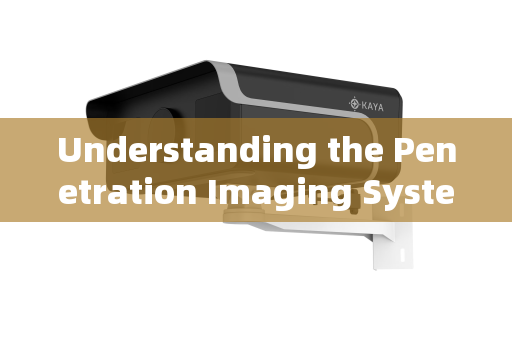
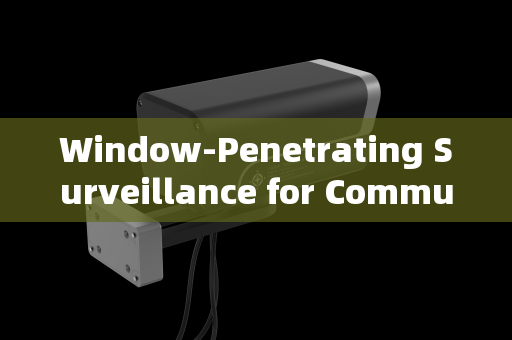
Penetration Imager Effect Images
Here’s how it achieves "flame-penetrating" imaging:
- Pulsed Illumination: The system employs a high-repetition-rate, nanosecond-pulse laser. This laser emits extremely short, intense bursts of light toward the scene.
- Time-Synchronized Gating: The heart of the system is an intensified gated camera. This camera is not continuously active. Instead, it features an ultra-fast optical shutter (the "gate"), built around a Microchannel Plate (MCP) image intensifier. This shutter can open and close in timescales as short as 3 nanoseconds.
- Spatial Slicing via Time Delay: The system's control electronics synchronize the laser pulse and the camera gate with exquisite precision (often better than 10 picoseconds). After a laser pulse is fired, the camera's shutter remains closed while the light travels to the scene and backscatter from nearby obscurants returns. The gate only opens for a brief window delayed precisely to correspond with the return time of light reflected from the target plane of interest. Light from flames, smoke, or fog closer than the target arrives when the gate is closed and is thus rejected.
- Stack-Scanning for 3D Insight: By progressively adjusting the time delay between the laser pulse and the camera gate, the system can effectively "slice" and image different depth planes within the scene. Stacking these slices enables high-contrast imaging of the target while suppressing foreground and background clutter, and crucially, it allows for the extraction of precise three-dimensional information about the target and its environment.
System Components & Performance Edge A typical system integrates a pulse laser, a beam expander, an imaging lens, and the critical Intensified Gated Camera. The camera itself houses the MCP intensifier (providing over 10^6x optical gain), high-voltage modules, and precision timing/gating electronics. This architecture delivers decisive advantages:
- Extended Operational Range: High-power pulsed illumination and signal intensification enable detection at long distances.
- Superior Range Resolution: Nanosecond gating allows for precise distance discrimination.
- Exceptional Anti-Interference Capability: Effectively overcomes backscatter from flames, smoke, and adverse weather.
- All-Weather, Day/Night Operation: Functions independently of ambient light, from pitch darkness to glare.
Broad-Spectrum Application Scenarios
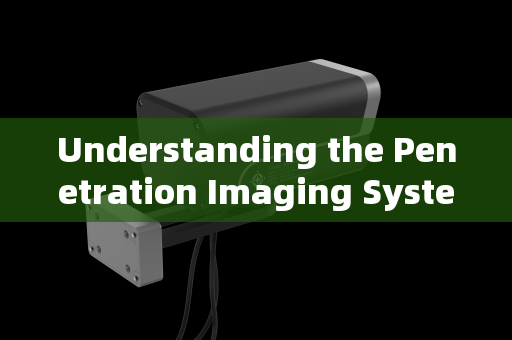
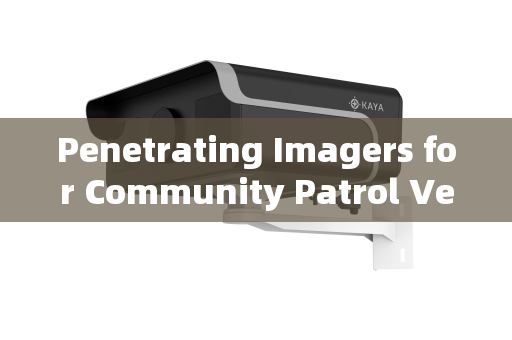
Penetration Imager Effect Images
Emergency & Firefighting: In urban and wildland firefighting, these systems are force multipliers. Rescue teams can locate victims, identify structural integrity, and pinpoint fire sources through thick smoke and flame fronts, dramatically improving efficiency and reducing responder and civilian casualties. They are equally vital for mine, water, and national USAR (Urban Search and Rescue) operations. Furthermore, they serve as critical tools in live-fire training facilities and for protecting high-value infrastructure like landmarks and large complexes.
Law Enforcement, Military & Security: For police and counter-terrorism units, penetration imaging enables covert surveillance and threat assessment through windows and obscured environments, vital for hostage rescue, armed interdiction, and evidence collection. It aids in border security, anti-smuggling operations, and vehicle inspection for overload or concealment. Military applications include target acquisition, reconnaissance, and navigation in battlefield smoke or harsh conditions.
Maritime & Border Security: In coastal and border surveillance, the system's ability to penetrate fog, haze, and glare ensures continuous domain awareness. It supports vessel boarding operations, port security, and maritime interdiction by providing clear imagery in poor visibility, ensuring mission continuity regardless of weather.
Conclusion The Penetration Imaging System, powered by laser range-gated technology, transcends the traditional limitations of optical surveillance. By mastering the dimension of time at the nanosecond level, it filters out chaos to reveal critical information. From piercing the heart of an inferno to secure a rescue to maintaining vigilant watch through storm and obscurity, this technology is redefining the possible across the spectrum of emergency response, public safety, and national security, ensuring that professionals no longer have to advance blind into the breach.