In the chaotic, zero-visibility environment of a structural fire, or amidst the thick smoke of a wildfire, the ability to see clearly can mean the difference between life and death. For first responders and military operators, obscurants like smoke, fog, dust, and haze have historically created a formidable visual barrier. Penetration Imaging Systems (PIS), also known as range-gated imaging or laser-gated viewing systems, are revolutionizing situational awareness by cutting through these veils. This article explores the advanced technology that enables these systems to achieve high-contrast imaging through smoke and other challenging media.
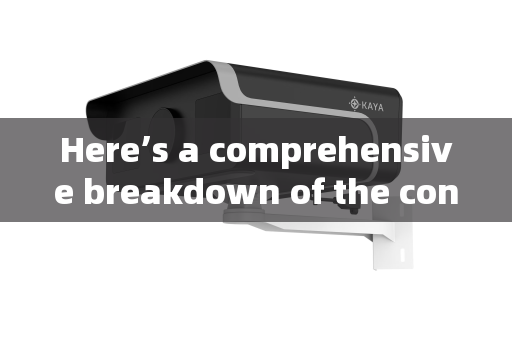
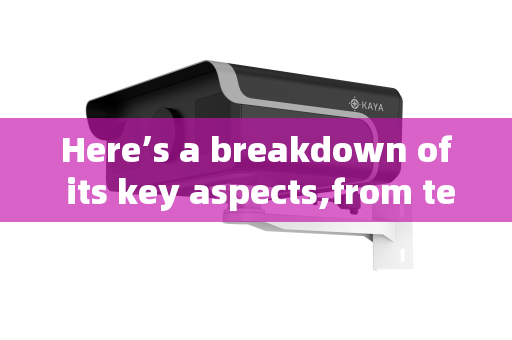
Penetration Imager Effect Images
Understanding the Penetration Imaging System
At its core, a Penetration Imaging System is an active imaging device designed to acquire visual information under extreme low-light or obscured conditions where conventional cameras (including thermal) fail. Its primary function is to actively illuminate a scene and selectively capture only the light reflected from the target area, while rejecting unwanted backscatter from particles in the line-of-sight (like smoke, fog, or water droplets). This capability fulfills critical needs for long-range reconnaissance, detection, and surveillance through various obscurants (fire, smoke, rain, snow, fog, haze) and even through specific transparent barriers like vehicle windows, building glass, or aircraft portholes. It also holds potential for underwater imaging.
The Core Technology: Laser Range-Gated Imaging
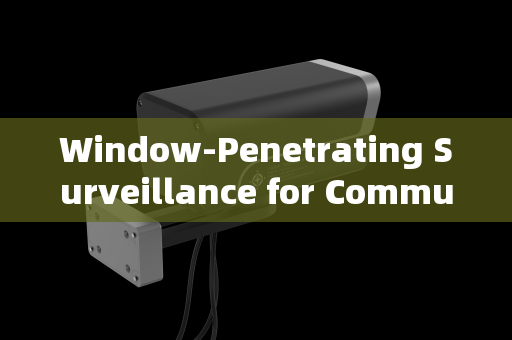
Penetration Imager Effect Images
The breakthrough lies in Laser Range-Gated Imaging Technology. This innovative method masterfully combines a high-repetition-rate pulsed laser with a gated intensifier camera.
Here’s how it defeats smoke and backscatter:
- Pulsed Illumination: The system projects a very short, intense pulse of laser light (often in the near-infrared spectrum, invisible to the naked eye) towards the target scene.
- Precision Timing & "Slicing" Space: This is the key. The gated camera’s shutter remains closed when the laser pulse is emitted and begins its journey. The light first hits nearby obscurant particles (smoke, fog), creating a massive amount of backscattered light that would normally blind a sensor. However, the system’s shutter is strategically delayed.
- Gated Reception: The camera’s ultra-fast optical shutter (with gating times down to less than 3 nanoseconds) opens only for a precise, nanosecond-scale window exactly when the laser pulse is reflecting off the desired target at a specific distance and is returning to the camera. By the time this useful signal returns, the backscattered light from the nearby smoke has already passed the sensor.
- Spatial "Slice" Stacking: By electronically sweeping or "stacking" the delay time between the laser pulse and the camera gate, the system can image different distance "slices" of the scene sequentially. This process builds up a clear, high-contrast image of the target area, effectively ignoring the light scattered by the intervening smoke.
System Components and Performance
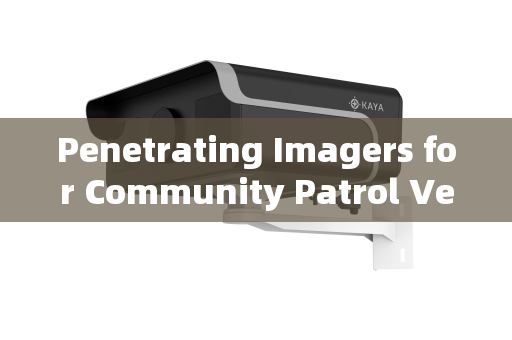
Penetration Imager Effect Images
A typical PIS comprises a pulsed laser illuminator, a gated intensifier camera, beam expanders, and imaging lenses. The heart of the camera is the Microchannel Plate (MCP) image intensifier, coupled with high-voltage, timing, and gating modules. This enables exceptional performance: optical gain exceeding 10^6, optical shutter speed below 3ns, and timing synchronization precision better than 10 picoseconds. This allows not only for clear 2D imaging but also for precise 3D (distance) information acquisition of the target.
Application Scenarios
-
Emergency Response & Firefighting: This is a primary domain. PIS is invaluable for urban and wildland firefighting, mine rescue, and water rescue operations. It allows rescue teams to navigate through dense smoke, identify victims, locate hotspots, and assess structural integrity in real-time, drastically improving operational efficiency and safety. It is also deployed in fire training academies and high-risk buildings for advanced preparedness.
-
Law Enforcement, Military, and Security: The system is a force-multiplier for counter-terrorism, surveillance, evidence collection, tactical entry, border patrol, drug interdiction, and military reconnaissance. It enables seeing through smoke grenades, adverse weather, and non-standard glass windows for covert observation and target identification, playing a pivotal role in smart city, smart security, and smart policing infrastructures.
-
Coastal and Border Defense: For maritime security and border surveillance, PIS provides crucial capabilities for long-range imaging through fog and haze and offers strong light suppression against glare. This ensures the continuity of critical missions—ship boarding, port security, and coastal monitoring—regardless of adverse weather conditions.
In conclusion, Penetration Imaging Systems represent a paradigm shift in optical sensing for harsh environments. By leveraging the precise synchronization of pulsed laser illumination and gated camera reception, they effectively "see around" obscurants like smoke, providing first responders, soldiers, and security personnel with the visual clarity needed to make critical decisions, execute missions successfully, and save lives in situations where the human eye and traditional optics are rendered blind.