Penetration Imaging vs. Infrared Thermal Imaging: A Comparative Analysis for Emergency and Law Enforcement Applications**
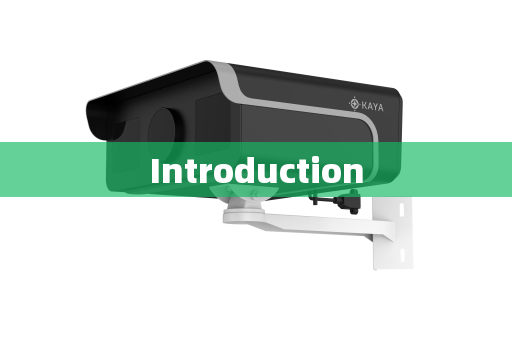
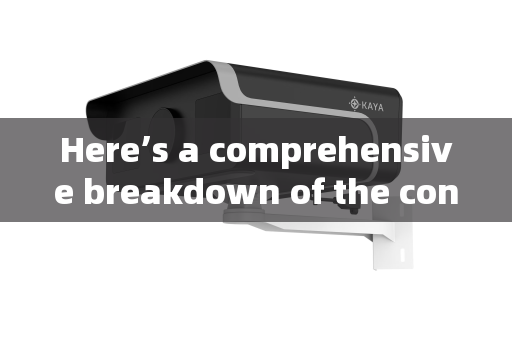
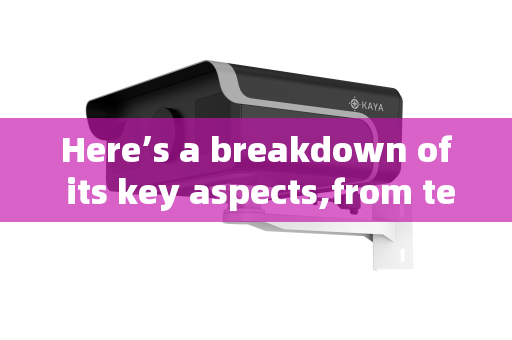
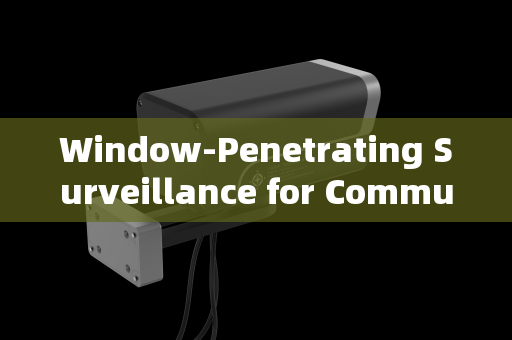
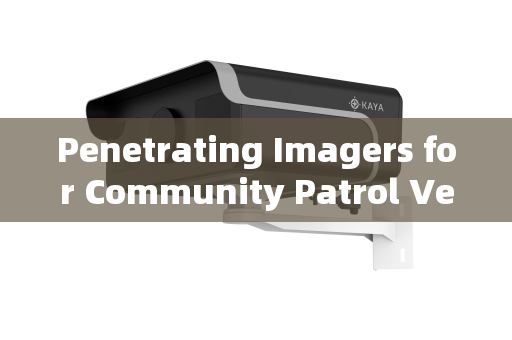
Penetration Imager Effect Images
In the realms of emergency response, law enforcement, military operations, and security, advanced imaging technologies are critical for situational awareness and mission success. Two sophisticated yet fundamentally distinct systems are the Penetration Imaging System and the Infrared (IR) Thermal Imager. While both serve the purpose of seeing beyond normal human vision, their underlying principles, capabilities, and optimal applications differ significantly. This article explores these differences, with a focus on the innovative Penetration Imaging System and its role in demanding operational environments.
Understanding the Infrared Thermal Imager
An Infrared Thermal Imager is a passive detection system that captures the mid-wave (MWIR) or long-wave (LWIR) infrared radiation naturally emitted by all objects based on their temperature. It converts this radiated heat into a visual image, typically a thermogram, where different colors or shades represent temperature variations. Its performance is influenced by the emissivity of materials and the temperature contrast between a target and its background.
Penetration Imager Effect Images
- Key Characteristics:
- Passive Sensing: Does not emit any energy; relies solely on detecting inherent thermal radiation.
- Temperature-Based Imaging: Reveals heat signatures, making it excellent for detecting living beings, overheating components, or recently used equipment.
- Limitations: Cannot see through transparent barriers like standard glass (which reflects/transmits IR poorly in some bands) or water. Performance can degrade in environments with minimal thermal contrast or in the presence of dense, obscurants like thick smoke or fog, which can scatter and attenuate IR signals.
Understanding the Penetration Imaging System (Laser Gated Imaging)
A Penetration Imaging System, specifically leveraging Laser Gated Imaging or Range-Gated Imaging technology, is an active imaging system. It operates on a radically different principle, combining a high-repetition-rate pulsed laser with a gated, intensified camera to achieve "see-through" capabilities in challenging conditions.
- Core Technology & Function: The system illuminates the scene with intense, ultrashort (nanosecond) pulses of laser light. A specially designed Gated Intensified Camera, synchronized with nanosecond-to-picosecond precision to the laser pulses, acts as an ultra-fast shutter. It opens only for the precise moment when light reflected from a specific "slice" of space (at a desired distance) returns. By ignoring light scattered back from obscurants (fog, smoke, rain, snow) closer to the sensor, it effectively "gates out" backscatter. By rapidly scanning through different range gates, it can construct a clear, high-contrast image of targets hidden behind or within obscuring media.
- Key Capabilities:
- Active Illumination: Uses its own laser light source, enabling operation in total darkness.
- Suppression of Backscatter: Excellently overcomes visibility degradation caused by smoke, fog, haze, rain, and snow.
- Medium Penetration: Can image through transparent and semi-transparent barriers such as vehicle windows, glass facades, aircraft windows, and certain特种玻璃 (specialty glass), as the coherent laser light can often pass through where thermal radiation cannot. It also shows potential for underwater imaging.
- Long-Range, High-Resolution: Capable of long-distance imaging with high spatial and range resolution.
- 3D Information: The precise time-of-flight measurement inherent in the gating process allows for accurate three-dimensional data acquisition of the target scene.
Comparative Analysis: Key Differences
Penetration Imager Effect Images
| Feature | Penetration Imaging System (Laser Gated) | Infrared Thermal Imager |
|---|---|---|
| Operating Principle | Active: Emits laser pulses and detects backscattered light with precise temporal gating. | Passive: Detects naturally emitted infrared radiation (heat). |
| Primary Information | Reflectivity-based visual image (akin to a high-contrast, illuminated photo); precise range data. | Temperature-distribution map (thermogram). |
| Penetration Capability | Excellent penetration through atmospheric obscurants (fog, smoke, etc.). Can image through glass and similar transparent media. | Cannot penetrate standard glass (blocks LWIR/MWIR). Limited penetration through very dense, particulate obscurants. |
| Light Dependency | Operates independently of ambient light (active illumination). | Operates in total darkness if there is thermal contrast. |
| Target Identification | Provides high-resolution, recognizable imagery of target shape and details. | Identifies targets based on heat signature; detail recognition depends on thermal contrast. |
| Key Advantage | Clear imaging in degraded visual environments (DVEs) and through windows. | Detecting heat signatures (people, vehicles, hotspots) regardless of light. |
Application Scenarios in Emergency and Law Enforcement Contexts
-
Penetration Imaging System is ideal for:
- Emergency Response (Fire & Rescue): For urban firefighting and wildland firefighting, penetrating thick smoke to locate victims, assess structural integrity, and identify fire sources. In water rescue and mine rescue, aiding in visibility through mist, spray, or particulate matter.
- Law Enforcement & Military: Surveillance and reconnaissance through windows for counter-terrorism, hostage rescue, or narcotics interdiction. Security checks of vehicles (passenger screening through glass) at checkpoints. Covert operations where detection of the imaging system is difficult.
- Border & Coastal Security: Long-range maritime surveillance through fog and haze for port security, ship boarding oversight, and coastal patrol, ensuring operations in all weather conditions.
-
Infrared Thermal Imager is ideal for:
- Search and Rescue: Detecting the heat signature of a missing person in foliage, at night, or in rubble.
- Surveillance: Identifying intruders or suspicious activity based on body heat in perimeter security.
- Firefighting: Locating hot spots behind walls (thermal tracking) and during overhaul.
- Police Operations: Tracking suspects fleeing at night or detecting recently abandoned vehicles.
Conclusion
The choice between a Penetration Imaging System and an Infrared Thermal Imager is not a matter of superiority, but of selecting the right tool for the specific challenge. The Infrared Thermal Imager remains the unmatched solution for detecting heat and targets based on temperature differentials. In contrast, the advanced Penetration Imaging System, with its laser gated technology, provides a revolutionary capability to obtain clear, recognizable imagery through obscurants and transparent barriers where thermal cameras and conventional optics fail. For mission-critical applications in emergency services, law enforcement, and defense that require visual identification and assessment in degraded visual environments or through windows, penetration imaging offers a transformative advantage, enhancing operational effectiveness and officer safety.