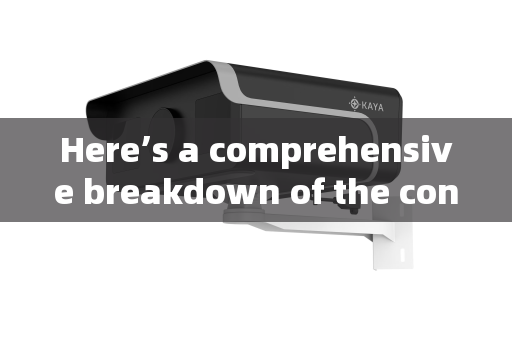
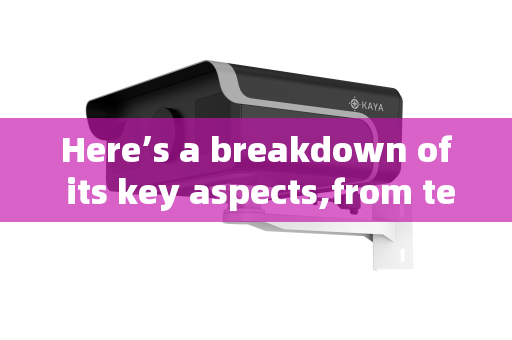
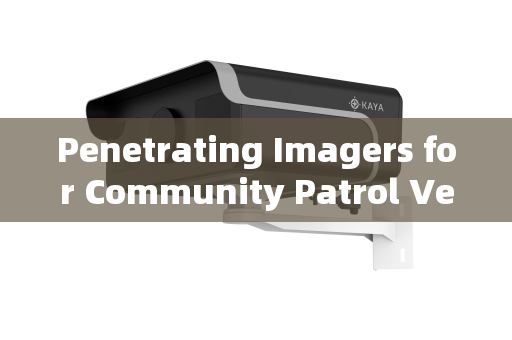
In the high-stakes arena of securing major international events—be they global summits, sporting spectacles, or mass public gatherings—the integrity of the security perimeter is paramount. A particularly sophisticated and potent tool has emerged as a game-changer in this domain: the penetration imaging system. Its role in vehicle security checks transcends conventional methods, offering an unparalleled capability to detect threats concealed behind opaque barriers, thereby forming an essential layer in a comprehensive, multi-faceted security architecture.
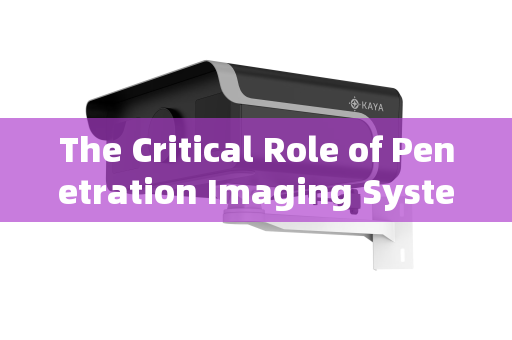
Penetration Imager Effect Images
Understanding Penetration Imaging Technology
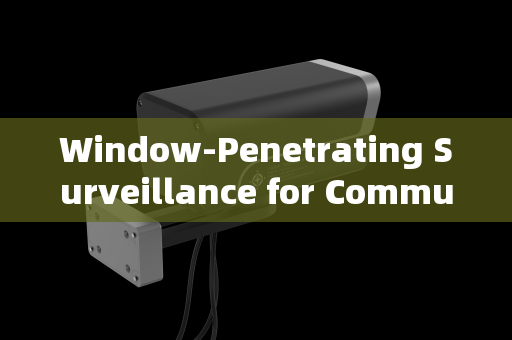
At its core, a penetration imaging system represents a pinnacle of active electro-optical surveillance. It employs advanced Laser Range-Gated Imaging (LRG) technology. This innovative approach ingeniously combines a high-repetition-rate pulsed laser with a gated, intensified camera. The system operates by emitting nanosecond-duration laser pulses and precisely synchronizing the camera’s ultra-fast optical shutter (with gating times under 3ns) to these pulses with exceptional precision (better than 10ps). By incrementally delaying the camera’s opening time relative to the laser pulse, the system captures "slices" of reflected light from specific distance segments. These slices are then computationally stacked to construct a high-contrast, detailed image of the target. Crucially, this time-gating mechanism allows the system to reject back-scattered light from obscurants close to the sensor, such as smoke, fog, or dust on a windshield.
The key components include a pulsed laser illuminator, a beam expander, imaging optics, and the critical gated intensified camera. This camera integrates a Microchannel Plate (MCP) image intensifier, a high-voltage power supply, and precise timing and gating modules, achieving optical gains exceeding 10^6. This configuration enables the system to perform under extreme low-light or no-light conditions and to "see through" various media that typically blind standard cameras or the human eye.
Application in Vehicle Security for Major Events: A Multi-Faceted Role
Penetration Imager Effect Images
During major events, the volume and diversity of vehicles requiring screening—from VIP convoys and service trucks to public transport and private cars near venues—is immense. Traditional checkpoints rely on physical inspection, canine units, and standard X-ray scanners, which have limitations in speed, stand-off distance, and the types of materials they can effectively screen against complex backgrounds.
-
Non-Intrusive, Long-Range Surveillance and Screening: Penetration imaging systems provide a critical stand-off inspection capability. Security personnel can scan approaching or stationary vehicles from a safe distance (tens to hundreds of meters), penetrating standard car windows, reinforced glass, tinted windows, and even bus or train windows. This allows for the discreet identification of potential threats—such as concealed individuals, weapons, suspicious packages, or illicit materials—inside the vehicle before it reaches a physical checkpoint. This proactive detection significantly enhances reaction time and allows for targeted intervention.
-
Overcoming Environmental and Obscurant Challenges: Major events proceed regardless of weather. Traditional optical systems fail in fog, heavy rain, smoke, or haze. The penetration imaging system's inherent ability to "slice through" these atmospheric obscurants ensures continuous operational capability. A vehicle attempting to use adverse weather as cover for a nefarious approach remains visible to this technology, maintaining the integrity of the outer security cordon.
-
Countering Evasion Tactics and Enhanced Situational Awareness: Threat actors may employ vehicles with specialized glazing or modified compartments. The system’s capability to image through various "specialty glasses" and media provides a countermeasure. Furthermore, in complex, dynamic environments like event perimeters, the system can aid in command and control by providing clear visual intelligence through smoke in case of a diversionary fire or through the windows of a building adjacent to a vehicle holding area.
Penetration Imager Effect Images
-
Integration into a Layered Security Framework: The system does not operate in isolation. It feeds real-time visual data into a broader security ecosystem. Intelligence gathered can cue other resources: directing a physical search, alerting rapid response teams, or guiding negotiators in a barricaded scenario. Its role is both preventive (deterring and detecting) and responsive (providing critical intel during an ongoing incident).
Alignment with Tactical and Professional Requirements
The operational language of event security, particularly in an international context shared by military, law enforcement, and emergency response professionals, demands specific terminology. Penetration imaging systems directly support missions categorized as Counter-Terrorism (CT), Force Protection, Access Control Point (ACP) operations, and Critical Infrastructure Protection. They enable stealthy reconnaissance, proof-of-concept for concealed threats, and enhance stand-off detection capabilities. Their utility in urban surveillance, perimeter defense, and high-value target (HVT) convoy security is explicitly recognized.
Conclusion
For the security planners of major events, the mandate is clear: achieve maximum threat detection with minimal disruption. The penetration imaging system answers this call decisively. By providing the unique ability to conduct long-range, non-invasive, and all-weather visual inspections of vehicle interiors—effectively rendering traditionally opaque barriers transparent—it addresses a critical vulnerability in the security chain. It moves vehicle screening from a reactive, tactile process to a proactive, intelligence-driven one. In the complex and pressurized security theatre of a major event, this technology is not merely an advantage; it is an indispensable asset for ensuring safety, preventing catastrophic incidents, and ultimately, safeguarding the event's success and legacy. Its role is that of a silent sentinel, seeing the unseen and ensuring that threats hidden in plain sight are identified and neutralized long before they can reach their intended target.