Support of the Penetration Imager for Fire Rescue with Smoke Penetration Imaging When Fire, Smoke, and Extreme Heat Obstruct Vision
In a structure fire, the combination of thick smoke, rolling flames, and searing heat creates an environment where traditional vision tools fail. Firefighters advancing into a burning building often find themselves disoriented within seconds, unable to locate the seat of the fire or identify victims trapped under debris. Thermal imagers, while useful for detecting heat sources, cannot distinguish between a hot wall and a human body when the entire room is engulfed in flames. Even high-intensity floodlights are useless against the dense, swirling smoke that scatters light and reduces visibility to less than one meter. This sensory blackout forces crews to rely on touch and memory, dramatically slowing rescue operations and increasing the risk of injury from structural collapse or flashover. The critical need is for a device that can see through the blinding veil of fire, smoke, and superheated air, restoring situational awareness without requiring physical proximity to the hazard.
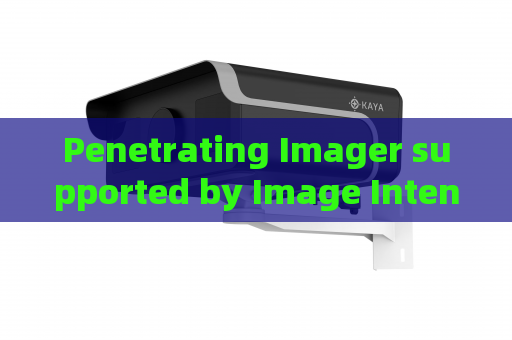
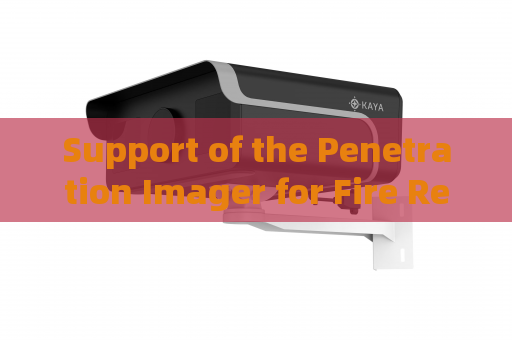
The penetration imager directly addresses this challenge through its laser-gated imaging technology. Unlike passive thermal systems, this device is an active optical instrument composed of a high-repetition-rate pulsed laser, an intensified gated camera with a microchannel plate intensifier, a high-voltage module, and timing control components. The system emits short laser pulses and opens the camera’s electronic shutter only for the precise moment when reflected light from the target returns, effectively blocking the overwhelming backscatter caused by smoke particles and flame luminescence. This time-gating mechanism allows the penetration imager to reject foreground interference and capture high-contrast images of objects behind layers of fire and moderate smoke. While the device cannot penetrate dense black smoke—a physical limitation of all optical systems—it can increase visibility by three to five times in typical fireground conditions where flames, heat shimmer, and light haze dominate. The result is a clear, real-time view of the room layout, doorways, and potential victims, even when the intervening air is filled with fire and extreme heat.
During actual fireground deployment, the penetration imager is operated from a safe distance, either handheld or mounted on a robotic platform. A firefighter standing at a doorway or behind a window can aim the device through the opening and immediately see the interior details that would otherwise be invisible. The laser beam passes through the glass or the open doorway, and the gated camera captures a sharp image of the far wall, a collapsed couch, or a person lying on the floor. The system’s ability to function through transparent barriers such as windows, aircraft portholes, or glass curtain walls makes it particularly valuable for vehicle fires or high-rise rescue where direct access is limited. In training exercises, teams have used the penetration imager to locate a fire’s origin within a smoke-filled room by identifying the actual flame source, not just the hot ceiling. The device also helps crews maintain orientation by revealing structural features like support columns and staircases that are completely hidden in the fire-obscured environment.
Operators must remember that the penetration imager is not a substitute for search cameras in heavy smoke conditions; its strength lies in cutting through flame and thermal distortion. When thick, black smoke from synthetic materials fills a space, visibility drops to zero regardless of laser wavelength, and the device will return only a fog-like image. However, in the more common scenario where a room has both fire and smoke—such as a living room fire with burning furniture—the penetration imager excels. The high-repetition-rate laser and fast gating effectively freeze the chaotic motion of flames and hot gases, producing a stable video feed that allows incident commanders to make informed decisions about entry points and hose line placement. By integrating the penetration imager into the standard toolkit, fire rescue teams gain a decisive advantage in the first critical minutes when every second counts and the only thing standing between them and a victim is a wall of blinding fire.