Protective border surveillance demands unwavering vigilance, yet severe weather conditions—torrential rain, dense fog, heavy snowfall, and thick dust storms—routinely cripple conventional optical systems. Traditional daytime cameras lose contrast when rain streaks blur the lens; infrared thermals suffer from atmospheric scattering and cannot penetrate water droplets or ice crystals suspended in the air. Radar-based solutions, while less affected by precipitation, struggle to distinguish between a stationary vehicle and a roadside bush, and they fail to provide the visual confirmation required for threat assessment. At border checkpoints, the ability to see through a rain-lashed vehicle windshield or identify a person moving through a fog bank is not a luxury—it is a tactical necessity. When a sudden storm rolls in, the most critical security gaps appear precisely when reaction time is shortest. The penetrating imager offers a decisive advantage in this exact scenario.
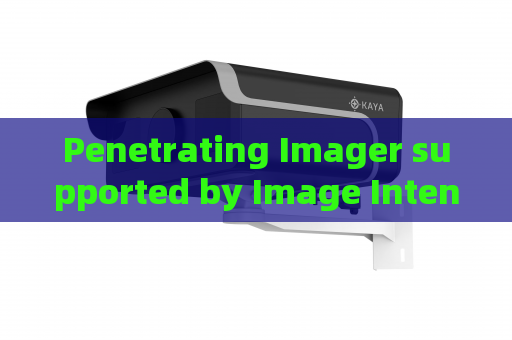
The penetrating imager operates on laser range-gated imaging technology—an active optical system that fires high-repetition-rate laser pulses and synchronizes an intensified gated camera to capture only the light returning from a specific distance slice. This gating mechanism effectively eliminates backscatter from rain, fog, snow, and haze, because scattered photons arriving earlier or later than the target’s echo are rejected by the camera’s microchannel plate intensifier. The result is a clear, high-contrast image of a target located behind a curtain of precipitation or a misted vehicle window. Unlike passive sensors that rely on ambient light or thermal differences, the penetrating imager actively illuminates the scene with its own laser source, ensuring stable visibility even in total darkness or through a rain-swept border crossing. Its ability to see through automobile glass, train windows, and aircraft portholes means that a suspect’s behavior inside a vehicle can be monitored continuously, regardless of whether the glass is fogged up or streaked with water.
In practice, border patrol units deploy the penetrating imager on fixed observation towers and mobile patrol vehicles. During a heavy downpour that reduces visibility to under 50 meters, the imager’s range-gating function is adjusted to focus on the checkpoint lane 200 meters ahead. The operator sees a crisp image of a car’s occupants through the rain-streaked windshield, noting hand movements or the presence of contraband that would otherwise be invisible. The system’s high resolution allows identification of facial features even when the window is partially obscured by clinging mist. Because the penetrating imager is immune to the flickering of lightning and does not produce a detectable glare that would alert a subject, it maintains covert, round-the-clock coverage. Maintenance is minimal: the laser and camera are housed in a sealed, heated enclosure to prevent condensation, and the software automatically calibrates the gate width to match changing fog density.

When a sudden snow squall blankets the border in whiteout conditions, conventional cameras become useless. The penetrating imager, however, continues to output stable video by rejecting the snowflake-induced backscatter and locking onto the target’s reflected laser pulse. Operators can zoom in on a specific cargo bed or a pedestrian crossing through a gate, confirming identity without physically approaching. This capability is especially vital for remote, unmanned border segments where a missed sighting could allow illegal crossings. The penetrating imager’s laser wavelength is eye-safe and invisible to the naked eye, so it does not compromise operational security. By maintaining continuous surveillance through the worst atmospheric conditions—rain, fog, snow, haze, and even dust—the system transforms a weather-induced blind spot into a permanently monitored corridor, fulfilling the fundamental requirement of protective border surveillance: never losing sight of the perimeter.