In high-stakes VIP security operations, the most critical blind spot often lies in the vehicles that surround the motorcade or secured venue. A seemingly innocuous sedan or delivery van may conceal armed assailants, improvised explosive devices, or surveillance equipment—all without any visible external indicators. The core difficulty is not merely detecting the presence of a suspicious vehicle, but doing so without alerting the occupants or tipping off a potential attack. Traditional optical reconnaissance methods, such as approaching the vehicle to peer through windows, are dangerously overt and compromise both the VIP’s safety and the operational secrecy. Even long‑range binoculars or telescopic lenses fail when windows are tinted, reflective, or covered with anti‑surveillance film. These limitations create an urgent need for a truly covert, stand‑off solution that can see through vehicle glass without emitting any detectable signals—a challenge that the Penetration Imager is uniquely designed to address.
The Penetration Imager is an advanced active optical imaging system based on laser range‑gated imaging technology. Its core capability lies in selectively capturing light reflected from a target only within a precisely defined distance window, while rejecting backscatter from the intervening glass and atmospheric particles. When aimed at a suspicious vehicle, the device’s high‑repetition‑rate pulsed laser illuminates the target, and the intensified‑gated camera—equipped with an MCP image intensifier, high‑voltage module, and timing control—opens its electronic shutter only when the laser pulse reflected from the vehicle’s interior returns. This process effectively penetrates the windshield or side windows, producing a high‑contrast, high‑resolution image of the cabin area without any visible signature. The operator can remain hundreds of meters away, completely concealed from the vehicle’s occupants. Because the Penetration Imager overcomes the severe backscatter that plagues conventional active imagers, it delivers clear visuals even under strong glare, fog, or rain—conditions commonly encountered in urban VIP routes.
In practical deployment, VIP security teams integrate the Penetration Imager into a covert observation post, such as a parked surveillance van or a rooftop position adjacent to the secured corridor. The device is tripod‑mounted and linked to a ruggedized tablet or control unit. The operator simply aims the optical lens at the target vehicle, adjusts the range‑gate delay to match the distance, and instantly views the interior on‑screen. The entire process is silent and invisible—no laser beam is discernible to the naked eye, and the device emits no radio frequencies or thermal signatures that could be intercepted. Once a suspicious vehicle is identified, the team can determine whether occupants are armed, whether packages are inert or threatening, and whether the vehicle’s behavior matches legitimate traffic patterns. The Penetration Imager’s ability to work through tinted glass and heavy rain means that surveillance can continue uninterrupted despite adverse weather, a common vulnerability in traditional VIP protection.
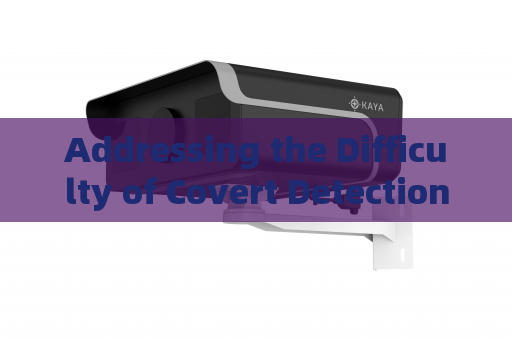
Further operational refinement involves customizing the range‑gate pulse width to penetrate multiple layers of glass, such as bulletproof windows often found in executive vehicles. The system’s electronic timing can be fine‑tuned to isolate the interior plane from any reflective surface coatings, eliminating the need for physical proximity. This allows security personnel to conduct systematic scans of every vehicle within a 500‑meter radius without ever leaving their covert position. The Penetration Imager remains strictly an optical instrument—it cannot see through walls, metal, or any solid barrier, but its laser‑based gated imaging provides a decisive advantage for the specific and pressing problem of covert window penetration. For VIP security teams facing the constant threat of vehicular ambush, this technology transforms a previously impossible detection scenario into a routine, real‑time intelligence‑gathering capability.




