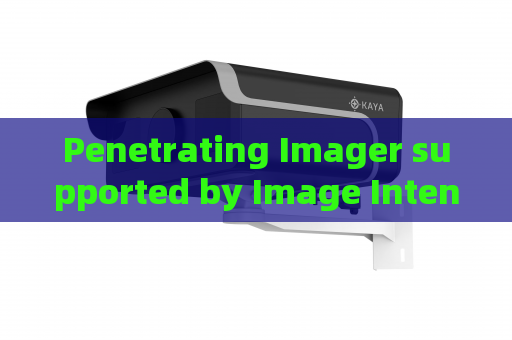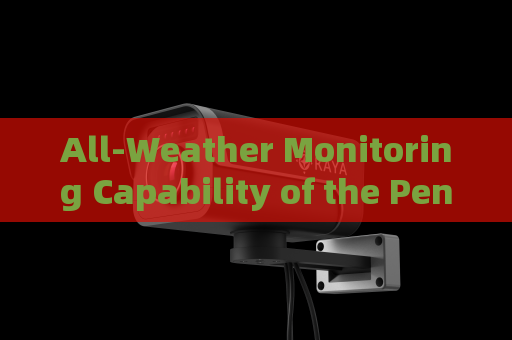
All-Weather Monitoring Capability of the Penetration Imager with All-Weather Penetration Technology When Severe Weather Disables Checkpoints Severe storms, dense fog, and torrential rain can bring checkpoint operations to a standstill. Conventional optical surveillance systems are rendered nearly useless when water droplets, haze, or smoke obscure the line of sight. Officers at fixed roadblocks or perimeter gates lose the ability to identify approaching vehicles, read license plates, or assess occupant behavior. The frustration intensifies when thick fog reduces visibility to a few meters, or when heavy rain creates a curtain of water between the camera and the target. During such weather events, checkpoints become vulnerable points of entry, as threats can exploit the blind spot. The core problem is that traditional imaging relies on ambient light or passive sensors, and any optical medium—whether falling rain, drifting mist, or blinding backscatter from headlights—blocks clear observation. This gap in monitoring capability creates a critical safety hazard for personnel and undermines the checkpoint’s primary function: to detect and assess before allowing passage. The penetration imager, a laser-based active imaging system employing range-gated technology, directly overcomes this limitation. Unlike standard cameras or thermal imagers, the penetration imager does not depend on ambient lighting or thermal contrast. It fires high-repetition-rate pulsed laser light, synchronized with an intensified gated camera that opens its electronic shutter only when the laser pulse returns from the target. This gate timing eliminates virtually all backscatter from fog, rain, snow, or smoke particles between the imager and the target. The instrument’s design includes a microchannel plate (MCP) image intensifier and precise timing modules that allow it to “see through” optical media such as water droplets and suspended haze. For a checkpoint scenario, this means the operator can obtain a high-contrast, high-resolution image of a vehicle’s windshield or driver cabin even during a blinding downpour. The penetration imager’s ability to suppress backscatter is its decisive advantage—the very effect that disables conventional cameras becomes negligible. In practical deployment at a checkpoint, the penetration imager is mounted on a tripod or vehicle rooftop and aimed at the approach lane. The operator views a real-time display that shows a clear, detailed image of the vehicle interior through the windshield, regardless of weather conditions. During a severe fog event that reduces visibility below 10 meters, the imager still produces a recognizable image of the driver’s face and hands at ranges of 50–100 meters. The operator can verify identification documents, observe for suspicious movements, or detect obscured contraband—all while the checkpoint remains fully functional. Because the device is an active optical system, it also performs well under low-light or no-light conditions, eliminating the need for auxiliary floodlights that often worsen backscatter in rain or fog. The same unit can handle fire-related scenarios, boosting visibility through heat haze or light smoke by three to five times, though it is not designed for dense, black smoke. The all-weather monitoring capability of the penetration imager transforms the checkpoint from a weather-dependent bottleneck into a persistent observation post. Its range-gated architecture ensures that every millimeter of rain or particle of fog becomes transparent to the operator’s eyes. The system’s immunity to backscatter means that severe weather no longer disables the checkpoint—instead, the penetration imager becomes the primary tool for maintaining security continuity. No other optical device can deliver comparable performance while remaining strictly within the domain of light-based imaging, without relying on radio waves or penetrating solid barriers. For law enforcement and security forces operating in extreme climates, this technology closes a dangerous gap in surveillance, allowing checkpoints to function as intended: to inspect, to deter, and to protect, no matter what the sky throws at them.