Maritime law enforcement faces a critical challenge when attempting covert detection for illegal vessel activities. Smugglers, human traffickers, and illegal fishers routinely operate under cover of darkness, fog, rain, or heavy sea spray. Traditional optical surveillance systems—daylight cameras, night-vision devices, and thermal imagers—struggle to see through cabin windows, portholes, or windscreens that are often tinted, reflective, or obscured by condensation. Even when a vessel is visually located, the interior remains hidden behind glass, making it impossible to confirm the presence of contraband, concealed individuals, or suspicious behavior without boarding. Boarding, however, risks alerting the crew, escalating violence, or losing evidence as illicit cargo is jettisoned. There is no room for error: a false alarm wastes resources, while a missed target allows crime to proceed. The pain point is clear—law enforcement needs a non-contact, all-weather, covert imaging solution that can see through glass and through adverse optical conditions without emitting detectable signals.
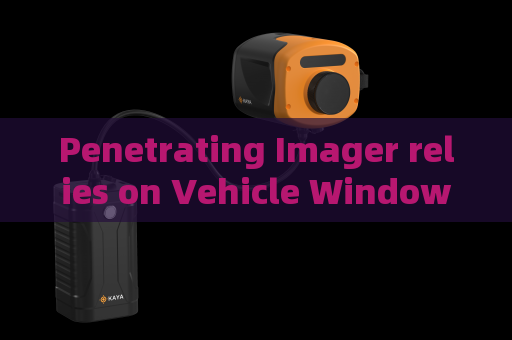
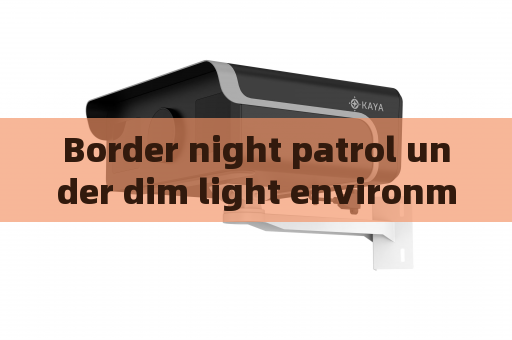
The penetrating imager directly resolves this pain point using advanced laser range-gated imaging technology. This active optical system combines a high-repetition-rate pulsed laser, an intensified gated camera (with MCP image intensifier, high-voltage module, and timing module), a beam expander, and an imaging lens. By emitting short laser pulses and synchronizing the camera’s shutter precisely to the return signal, the penetrating imager overcomes backscatter from fog, rain, snow, or haze. It produces high-contrast, long-range images through optically transparent barriers such as vessel windscreens, side windows, aircraft cabin windows, and glass curtain walls. The system’s unique gating capability allows operators to selectively image a target at a specific distance, rejecting reflections from the glass surface itself and from atmospheric particles. This means that even in dense fog or during a rain squall, the penetrating imager can deliver clear, real-time video of activity inside a suspect vessel’s wheelhouse or passenger cabin—without any active radio-frequency emissions, sound, or visible light that might betray the surveillance platform.
In actual maritime interdiction operations, the penetrating imager is deployed from a coastal patrol helicopter, an unmanned aerial vehicle, or a fixed observation post on shore. The operator scans the target vessel from a safe standoff distance—often several hundred meters away—while the system automatically compensates for platform vibration and sea-state motion. Through the eyepiece or a ruggedized tablet display, the operator sees through the vessel’s windscreen as if it were clear air: outlines of crew members, stacked cargo boxes, or hidden compartments become sharply visible. The image maintains high resolution even in heavy spray, allowing discrimination between a legitimate fishing net and a wrapped package of narcotics. Because the penetrating imager is an active imaging system, it performs equally well at night, using the laser’s near-infrared wavelength invisible to the human eye. The crew of the suspect vessel remains unaware that their movements are being observed, preserving the element of surprise for the boarding team.
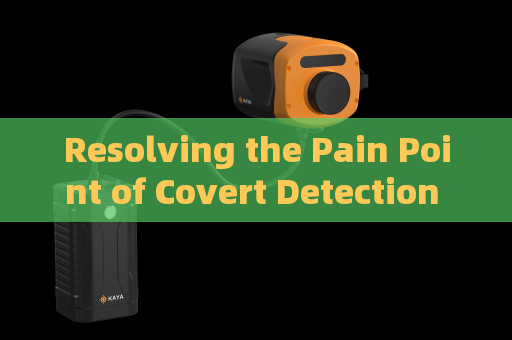
Field tests with coast guard units have demonstrated that the penetrating imager increases optical range in foggy conditions by a factor of three to five compared to standard low-light cameras. Against tinted glass, the system reliably resolves fine details such as letters on shipping labels or the shape of a handgun. The operational workflow is straightforward: a single operator can be trained in under two hours to align the laser and adjust gate delays. The system’s intrinsic safety—no ionizing radiation, no audible clicks, no visible flash—makes it ideal for covert detection for illegal vessel activities, where every second of undetected observation strengthens the case for legal action. This technology does not replace radar or AIS; it fills the critical gap between electronic detection and physical boarding—the exact gap where hidden crimes thrive.