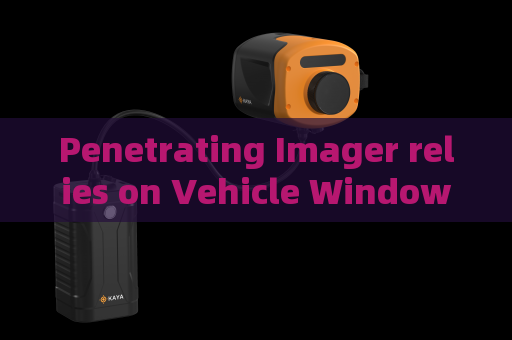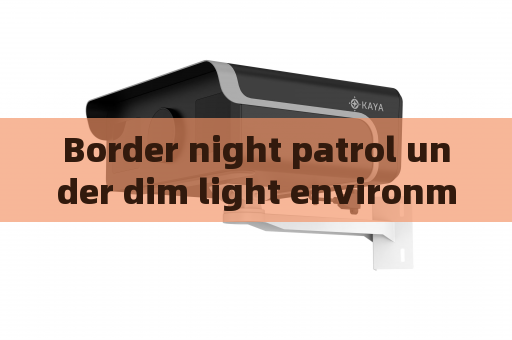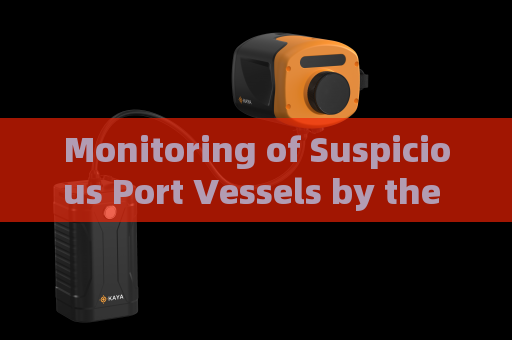
Monitoring of Suspicious Port Vessels by the Penetration Imager in Strong Backlight Overexposure Conditions with Strong Light Suppression Imaging Port security personnel face a persistent challenge when monitoring suspicious vessels during daylight hours. The combination of direct sunlight, glare from the water surface, and reflections off aluminum hulls or white superstructures creates severe backlight overexposure. Conventional electro-optical cameras, even those with wide dynamic range, often produce a washed-out silhouette where critical details—hull markings, registration numbers, crew movement on deck, or activity near portholes—become completely invisible. This visual blind spot is especially dangerous when a suspect vessel attempts to camouflage its identity or conduct covert operations in full daylight. The glaring environment essentially renders standard surveillance equipment ineffective, forcing operators to rely on radar or AIS data, which can be spoofed or turned off. A dedicated imaging solution that can penetrate the intense background light and recover usable intelligence from the subject is urgently needed. The Penetration Imager addresses this exact pain point by employing active laser gated imaging to selectively capture reflections from the target while discarding overwhelming ambient light. The Penetration Imager is an advanced optical instrument built on laser range-gated imaging technology. It comprises a high-repetition-rate pulsed laser, an image-intensified gated camera (incorporating a microchannel plate intensifier, high-voltage module, timing module, beam expander, and imaging lens). Instead of flooding the scene with constant illumination, the system emits extremely short laser pulses—typically in the nanosecond range—and synchronizes the camera shutter to open only when the reflected pulse from the target distance arrives. This gating principle suppresses all light outside the selected range, including the powerful backlight from the sun or water reflections. The result is a clear, high-contrast image of the vessel even under overexposure conditions. Furthermore, because the laser wavelength is tailored to minimize atmospheric scattering, the Penetration Imager can effectively overcome backscatter from haze, light rain, fog, or spray near the waterline. Its strong light suppression imaging mode actively attenuates the background luminance while amplifying the laser return from the suspect boat’s surfaces and windows, making it possible to read faded identification numbers or observe interior movements through glass. In a typical port surveillance operation, the Penetration Imager is mounted on a pan-tilt platform at a coastal observation post or on a patrol boat. The operator selects the target vessel based on radar plots or prior intelligence. As the suspect ship drifts at anchor or slowly transits through the harbor, the imager is aimed directly at the area of interest—the wheelhouse window, the stern registration plate, or the cargo hatch. Despite the harsh midday sun reflecting off the water at a low angle, the real-time display shows a perfectly exposed image: the laser-illuminated section appears crisp, with the glass of the wheelhouse rendered semi-transparent, revealing figures and equipment inside. The strong light suppression algorithm eliminates the bloom that would normally saturate the sensor. The operator can zoom in to inspect a nameplate or a crew member’s face without any clipping. This capability is particularly valuable when boarding is impossible or dangerous, allowing authorities to confirm the vessel’s identity and activity from a safe standoff distance. Further, the system’s ability to operate effectively across changing light conditions makes it a reliable tool for round-the-clock surveillance. At dawn or dusk, when the sun sits just above the horizon and creates the most severe backlighting, the Penetration Imager maintains its performance by dynamically adjusting the laser pulse energy and gate width. In moderate fog or light rain, the gating technique rejects the scattering from droplets between the camera and the target, keeping the vessel’s details sharp. For port police and coast guard units tasked with monitoring suspicious craft, this imaging capability fills a critical gap—it provides actionable visual intelligence in the one scenario where all other optical sensors fail: strong backlight overexposure. The Penetration Imager does not rely on thermal signatures or acoustic waves; it remains strictly within the optical domain, using light to see through light’s own interference. With this tool, a single observer can confirm whether a vessel’s reported identity matches its actual markings, detect unauthorized modifications, or record evidence of illegal operations, all from a position hidden behind the glare.