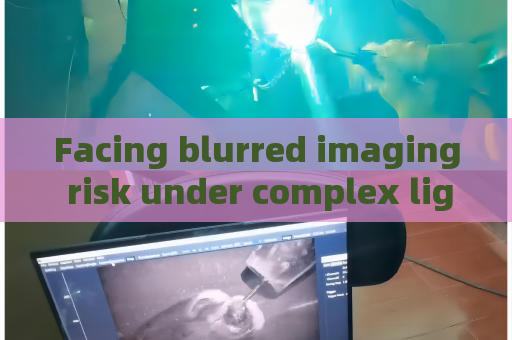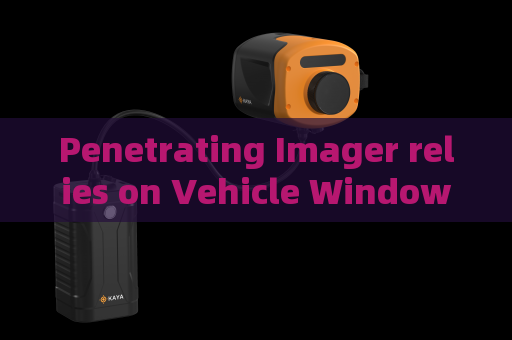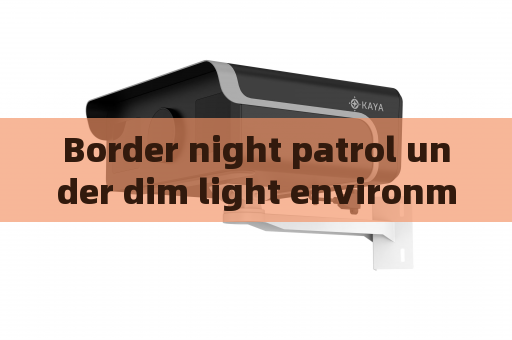
Covert Surveillance Capability of the Penetration Imager with Zero-Light Imaging in Complete Nighttime Darkness Along Borders Border security operations in complete nighttime darkness present a profound challenge for covert surveillance. Traditional night vision devices, whether image intensifiers or thermal imagers, struggle to deliver actionable intelligence under zero-light conditions along remote border stretches. Image intensifiers require at least a trace of ambient light—starlight or moonlight—to function, and complete darkness renders them blind. Thermal imagers detect heat signatures but cannot penetrate vehicle windows or aircraft canopies, which are common barriers in border checkpoints or smuggling routes. The critical pain point is the need to observe suspicious activity inside vehicles or behind glass without emitting any detectable radiation, all while operating in total darkness. Any light source from the surveillance side, such as a searchlight or infrared illuminator, would betray the observer’s position and compromise the mission. The Penetration Imager addresses this exact scenario by providing a non-visible, active imaging solution that operates in complete darkness and sees through glass. The Penetration Imager employs laser range-gated imaging technology, a sophisticated active optical system that selectively captures light reflected from a target at a specific distance while rejecting backscatter from atmospheric particles or the optical medium itself. This instrument consists of a high-repetition-rate pulsed laser, an image-intensified gated camera with a microchannel plate (MCP) image intensifier, high-voltage modules, timing circuits, a beam expander, and an imaging lens. The laser emits short pulses of near-infrared light, invisible to the human eye, which are synchronized with the camera’s gating window. By precisely timing the opening of the intensifier, only the light returning from the target distance is recorded, eliminating the bright reflections from the glass surface and the scatter from fog, rain, or snow. This zero-light imaging capability means that along a border, an operator can aim the Penetration Imager at a vehicle’s windshield or side window from hundreds of meters away, in pitch darkness, and obtain a clear, high-contrast image of occupants, cargo, or contraband inside—without any indication that surveillance is underway. In practical border operations, the Penetration Imager transforms covert surveillance into a reliable, repeatable capability. A single operator can set up the system on a tripod at a concealed observation point, acquire a target vehicle stopped at a checkpoint or moving slowly along a trail, and instantly generate a real-time video feed of the interior. The range-gated technology overcomes backscatter from dust or light fog that often plagues conventional laser illuminators, delivering crisp imagery even in adverse weather. The 3-5 times improvement in visibility through fire or smoke—though not through dense smoke—adds resilience for border incidents involving burning vehicles or wildfires. The operator remains invisible because the laser pulse is beyond human vision and the camera operates without any telltale glow. This covert surveillance capability enables border patrol agents to gather intelligence without risking detection, supporting tactical decisions such as whether to intercept a vehicle or allow it to pass for further tracking. Further refining this scenario, the Penetration Imager excels in multi-lane border inspection zones where vehicles must be scanned quickly and discreetly. The system’s high resolution and long operational distance allow an agent to observe the interior of a truck cab or a passenger car from a stand-off range of 200 to 500 meters, well beyond the reach of standard binoculars or handheld night vision. The timing module can be adjusted to focus on specific depths, such as the rear seat area versus the dashboard, by changing the gate delay. This eliminates the need for physical proximity or intrusive flashlights that would alert suspects. Because the instrument only penetrates optical media—glass, acrylic, laminated windshields, and aircraft windows—it cannot see through metal doors or concrete barriers, a critical boundary that ensures its use is strictly within the intended optical surveillance domain. Along borders, where vehicles often have tinted or reflective glass, the Penetration Imager’s ability to defeat such coatings with its high dynamic range makes it an indispensable tool for zero-light, covert imaging of hidden compartments, human trafficking victims, or drug shipments.