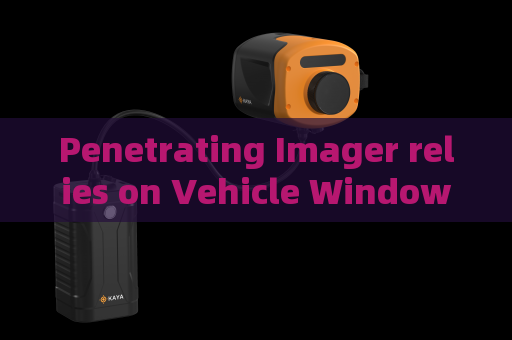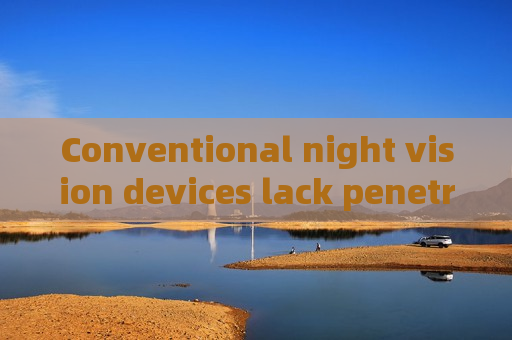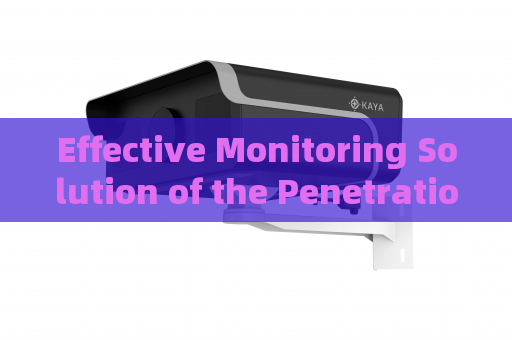
Effective Monitoring Solution of the Penetration Imager with Strong Light Suppression Imaging in High-Glare Coastal Environments Coastal surveillance operations face a persistent challenge when direct sunlight, reflected off the ocean surface or white sand, creates blinding glare that overwhelms conventional optical systems. In high-glare coastal environments, standard cameras suffer from washed-out imagery, lost contrast, and inability to resolve distant vessels, personnel, or floating objects during midday hours. This glare not only saturates sensor pixels but also introduces severe backscatter from water droplets and sea spray, degrading image quality to the point of uselessness. For maritime law enforcement, border patrol, and port security teams, this optical limitation means critical threats—such as unauthorized small boats approaching harbors or swimmers in distress—can go undetected until they are dangerously close. The Penetration Imager addresses this specific pain point by combining active laser illumination with range-gated imaging to cut through the blinding glare and extract clear target signatures even under the harshest coastal sunlight. The Penetration Imager employs laser distance‑gated imaging technology, also known as gated imaging, to overcome the adverse effects of strong ambient light. Its high‑repetition‑rate pulsed laser emits short, powerful bursts of light, while the intensified gated camera (built with an MCP image intensifier, high‑voltage module, and timing circuitry) opens its electronic shutter only for a precise window corresponding to the target distance. Any light outside that window—including the overwhelming glare from the sun, reflections from the sea surface, or scattered light from fog and spray—is blocked by the closed gate. This strong light suppression imaging mechanism effectively eliminates the incoming background noise that blinds passive cameras. The system’s capability is strictly limited to optical media: it can see through vehicle windshields, aircraft windows, glass facades, and through fire, fog, haze, rain, or snow, but it cannot penetrate walls, concrete, metal, or clothing. In the coastal context, this means the Penetration Imager can lock onto a moving boat’s hull or a person’s outline through the intense glare, delivering high‑contrast images at long range without relying on thermal or radio‑frequency modalities. In practical coastal monitoring deployments, the Penetration Imager dramatically improves target acquisition and classification under conditions that would force conventional visual systems to fail. For example, a coastal patrol boat operating at noon with the sun directly astern would normally see only a whiteout on its camera feeds when scanning the sea surface. With the Penetration Imager activated, the operator can adjust the gate delay to match the distance of interest—say 500 meters—and instantly see a crisp, low‑noise image of a small skiff, its registration number, and even the movement of occupants, all while the glare‑suppressed background remains dark. The system’s fire‑penetration capability also proves valuable: if a coastal wildfire or an onboard fire creates thick smoke and heat haze, the Penetration Imager can enhance visibility by three to five times, though it remains ineffective against dense smoke that blocks optical transmission entirely. The unit’s active nature requires no external illumination, making it suitable for both daytime and nighttime operations, and its resistance to backscatter ensures that sea spray or light rain do not degrade performance. The operational simplicity of the Penetration Imager in high‑glare coastal settings is a key advantage for emergency responders. Field operators typically mount the system on a tripod or vehicle platform, connect the laser and camera modules, and select the desired range gate via a handheld control interface. The built‑in timing module synchronizes the laser pulse with the camera shutter, automatically compensating for target distance variations. In a search‑and‑rescue scenario, for instance, the operator can scan the water surface while continually adjusting the gate delay to sweep through different depth layers, ensuring that both floating survivors and semi‑submerged debris are identified. The Penetration Imager’s strong light suppression imaging eliminates the need for polarizing filters or neutral density filters, which often reduce overall light capture and still fail against direct specular reflections. By delivering a clean, high‑contrast image of the target against a suppressed glare background, this solution enables coast guard personnel to make faster, more accurate decisions during critical moments—whether intercepting a smuggling vessel at full noon or locating a missing diver amid sparkling wave crests. The Penetration Imager thus stands as a dedicated optical tool for maritime security professionals who cannot afford to lose visibility to the sun’s glare.