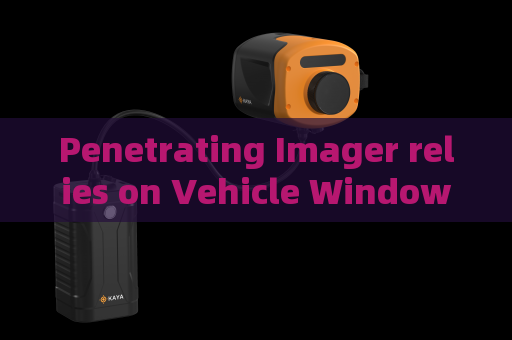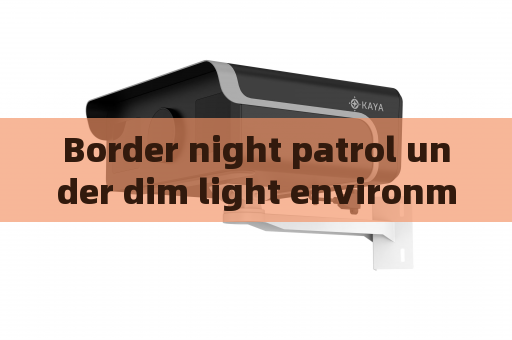
Non-Stop Inspection Capability of the Penetration Imager for Tinted Glass with Strong Light Suppression Imaging at Night Nighttime vehicle inspections pose a persistent challenge for law enforcement and security personnel, especially when dealing with heavily tinted windows. Standard optical devices—flashlights, thermal cameras, or even conventional night-vision goggles—often fail to penetrate dark window films, leaving officers blind to potential threats hidden inside a car. The problem intensifies when ambient light sources, such as oncoming headlights, street lamps, or emergency vehicle strobes, create blinding reflections off the glass surface. These glares not only obscure the interior view but also cause eye strain and delay critical decision-making at checkpoints or during covert surveillance. The need for a tool that can cut through both the tinted barrier and the overwhelming light interference is urgent, and the Penetration Imager directly addresses this gap with its unique optical architecture. The Penetration Imager is an active optical imaging system built around laser range-gated imaging technology. It comprises a high-repetition-rate pulsed laser, an intensified gated camera with a microchannel plate (MCP) image intensifier, a high-voltage module, a timing module, a beam expander, and an imaging lens. Instead of relying on passive light or thermal radiation, the system emits short laser pulses and opens its camera shutter only when the reflected light from the target distance returns. This time-gated principle effectively rejects backscatter from fog, rain, or dust, and more importantly for this scenario, it suppresses strong light sources that are outside the gated time window. By synchronizing the camera’s exposure with the laser pulse reflected from objects inside the vehicle—behind the tinted glass—the device eliminates glare from headlights or environmental lighting. The result is a clear, high-contrast image of the car’s interior, even through dark tint and under intense night-time illumination. In real-world field operations, the Penetration Imager enables non-stop inspection of vehicles without requiring officers to approach the car or ask the driver to roll down windows. An operator can stand at a safe distance, aim the device at a suspicious sedan with deep-tinted windows, and instantly view the cabin on a handheld display. Even if another vehicle’s high beams sweep across the target, the strong light suppression function maintains image clarity—the system gates out the stray light pulses that cause flare. This capability is particularly valuable at dynamic checkpoints where traffic flow is continuous, as it allows rapid, discreet assessments. Officers can detect hidden contraband, weapons, or individuals without alerting the occupant, reducing confrontation risks. The imaging range can extend to tens of meters, and the resolution remains sufficient to identify seat positions, hand movements, or loose objects. A further operational detail lies in the device’s adaptability to varying tint densities and glass angles. The Penetration Imager’s pulsed laser power and gate timing can be adjusted to match the specific reflectance of different window films, from factory-tinted glass to aftermarket dark coatings. During nighttime patrols, an operator may encounter a minivan with 20% visible light transmission—standard optics would show only a mirror-like reflection under streetlights. The Penetration Imager, however, penetrates that barrier by illuminating the interior with its own laser and ignoring the external light reflections. The imaging system also compensates for oblique angles, ensuring that even side windows viewed from a patrol vehicle’s position yield usable data. This single function—non-stop inspection through tinted glass under strong light suppression—transforms a routine traffic stop into a safer, more effective intelligence-gathering moment for security personnel.