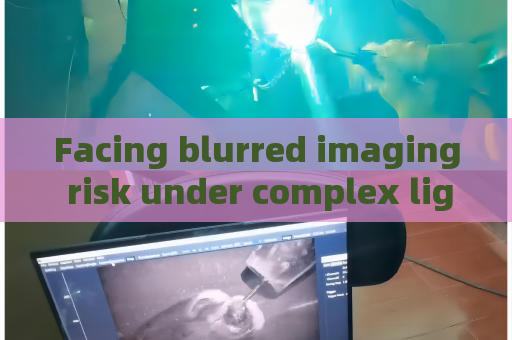
The detection of illegal border crossings, such as human trafficking and contraband smuggling, presents a persistent challenge during nighttime operations. In zero-light conditions, traditional optical surveillance systems fail to capture usable imagery. Passive night vision devices, while capable of amplifying faint ambient starlight, become completely ineffective under overcast skies, deep woodland shadows, or in the absence of any natural illumination. Thermal imagers detect heat signatures but cannot identify specific objects through vehicle glass, nor can they differentiate between a warm engine block and an individual hiding inside a car boot. Thick fog, heavy rain, or even dust kicked up by vehicles further degrade image quality. The resulting blind spots allow smugglers to exploit darkness, often using tinted or mirrored windows on vehicles to conceal passengers or cargo. Border patrol officers need a tool that can operate in absolute darkness, cut through optical obstructions, and provide crisp, actionable intelligence without revealing the observer’s position.
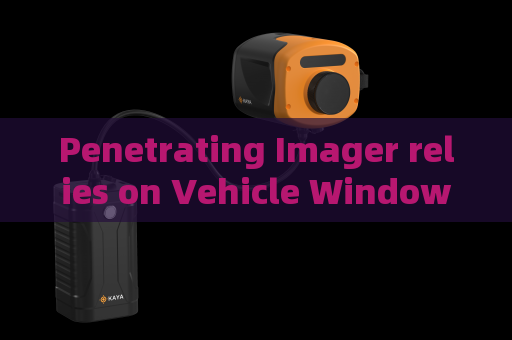
The penetration imager is designed precisely to overcome these limitations. This advanced optical imaging instrument employs laser range-gated imaging technology—also known as gated imaging. The system consists of a high-repetition-rate pulsed laser, an intensified gated camera (built around a microchannel plate image intensifier, high-voltage module, and timing module), a beam expander, and an imaging lens. As an active imaging system, it fires brief laser pulses toward the target and synchronizes the camera shutter to open only when the reflected light returns from a specific distance. This time-gating mechanism effectively gates out backscatter from fog, rain, or airborne particles, delivering high-contrast images even through optical media. The penetration imager can see through vehicle windshields, train windows, aircraft portholes, and glass curtain walls. It operates reliably in zero-light conditions because the laser itself provides the illumination. Furthermore, the system performs well in extreme weather: it can penetrate fire smoke to boost visibility three to five times, and it remains effective in heavy fog, haze, rain, and snow—though it cannot see through dense smoke or non-transparent solids such as walls or concrete.
In practical border surveillance, the penetration imager allows officers to inspect vehicle interiors from a safe distance without approaching the car. A patrol team stationed at a remote checkpoint can deploy a tripod-mounted unit and scan approaching vehicles one by one, even when all lights are off and the road is shrouded in dense fog. The operator sees a clear, real-time image of the driver, passengers, and cargo area—including items hidden under seats or behind panels—through the glass. The system’s high resolution and long operating range mean that smugglers cannot defeat it by applying dark window tint or by turning off the vehicle’s interior lights. Because the laser wavelength is typically in the near-infrared spectrum, the illumination is invisible to the naked eye, preventing suspects from realizing they are under surveillance. This covert capability is critical for interdiction operations that rely on surprise.
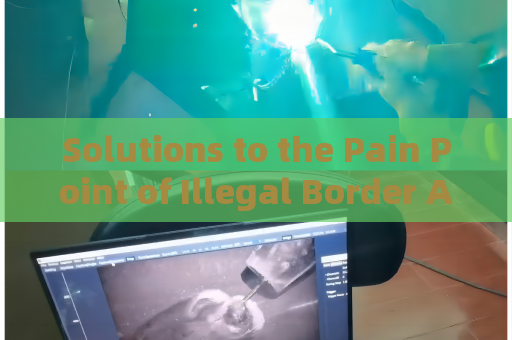
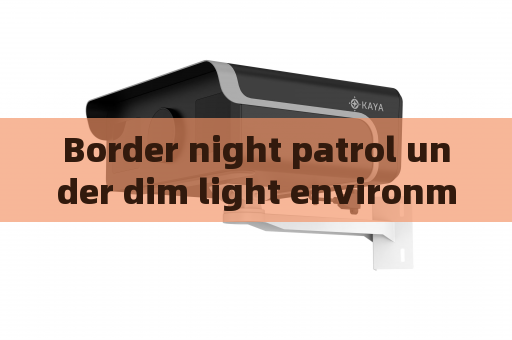
Field trials along remote border zones have demonstrated that the penetration imager reduces false alarms significantly. Fog and heavy rain, which once forced thermal cameras into a blur of noise, now yield clear outlines of human forms and contraband bundles behind car windows. Officers can make informed decisions before committing to a vehicle stop, thereby improving officer safety. The system’s operation is straightforward: the gated camera’s timing module adjusts the range gate to match the distance of the target, and the pulsed laser fires at a rate that ensures each frame is uniformly illuminated. Maintenance involves standard cleaning of the optics and ensuring the laser source is aligned. With ruggedized housing and a compact form factor, the penetration imager can be mounted on patrol vehicles, fixed observation towers, or portable tripods for quick deployment in the field. By directly addressing the core pain point of zero-light border detection, this technology transforms the night from a smuggler’s ally into an enforcer’s advantage.