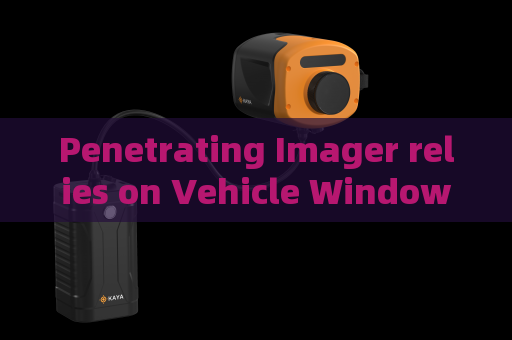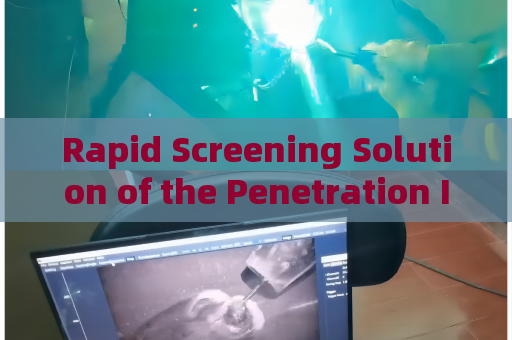
Rapid Screening Solution of the Penetration Imager for High-Reflective Mirror-Film Vehicles with Through-Tint Imaging High-reflective mirror-film vehicles present a persistent challenge for law enforcement and security screening operations. When a vehicle is coated with a highly reflective mirror finish or heavily tinted windows, conventional optical surveillance tools such as binoculars, dash cameras, or handheld spotlights fail to reveal occupant behavior or interior cargo. The intense glare from sunlight or streetlights creates blinding reflections that wash out any detail behind the glass. Even with bright auxiliary lighting, the metallic film reflects most of the visible spectrum, turning the windshield and side windows into impenetrable mirrors. This condition forces officers to rely on time-consuming manual inspections—approaching the vehicle, knocking on windows, or using flashlights at close range—which exposes personnel to potential threats, wastes critical response time, and disrupts traffic flow in checkpoint scenarios. The fundamental pain point is the inability to achieve a non-contact, rapid, and reliable visual assessment of the interior of a mirror-film vehicle under real-world ambient lighting conditions. The Penetration Imager directly addresses this screening bottleneck through its Through-Tint Imaging capability. Built as an advanced active optical imaging system, the Penetration Imager employs laser range-gated imaging technology—also known as gated imaging—to selectively capture light reflected from a target behind the glass while rejecting the blinding surface reflection. Its core components include a high-repetition-rate pulsed laser, an intensified gated camera integrating an MCP image intensifier, a high-voltage module, timing circuitry, a beam expander, and an imaging lens. By synchronizing the laser pulse with the camera’s ultra-fast shutter, the system isolates the optical signal that has passed through the tinted film and traveled to a specific distance, effectively cutting off the overwhelming backscatter and specular glare from the mirror surface. This allows the operator to see through the vehicle’s windows as if the reflective film and heavy tint were nearly transparent. Unlike passive thermal imagers or radar-based devices, the Penetration Imager operates entirely within the optical domain, using controlled laser illumination to overcome high-contrast scenarios that defeat ordinary cameras. In practical field deployment, the Penetration Imager enables a single officer to conduct rapid screening from a safe standoff distance. The operator aims the device at a target vehicle, adjusts the gating delay to match the depth of the cabin interior, and the live image on the display instantly reveals occupants, seats, floor area, and any cargo behind the reflective glass. Even under direct sunlight or low-light conditions, the system maintains high-resolution clarity because the laser illuminates only the region of interest and the gated camera suppresses background noise. This functionality has proven effective at vehicle checkpoints, border crossings, and parking lot inspections where mirror-film vehicles are common. The operation requires no physical contact, no removal of tints, and no special environmental control—the screening cycle from aim to assessment typically takes seconds per vehicle. Officers can maintain a secure position behind barriers or at a distance, reducing risk of ambush while keeping traffic moving. Further operational refinement involves the device’s ability to handle multiple vehicle angles and varying film densities. The Penetration Imager’s through-tint mode automatically compensates for different levels of window darkness, from light factory tints to aftermarket mirror films that reflect over 90% of visible light. At a typical standoff of 10 to 30 meters, the system can discriminate between a person’s silhouette and a seatback, or detect an open container on the floor. In rain, fog, or light mist, the gated principle still functions because it rejects diffuse backscatter from water droplets, maintaining operational capability where conventional optics become useless. The system is not designed to penetrate walls or opaque materials—only optical media such as automotive glass, aircraft windows, or glass curtain walls. For high-reflective mirror-film vehicles specifically, this solution closes a critical gap in rapid screening protocols, giving security professionals a decisive optical tool that transforms a previously blind spot into a clear, actionable view. The penetration imager remains the only field-proven instrument that turns through-tint imaging into a fast, non-contact reality for law enforcement and counter-threat operations.